REVIEW · NEW DELHI
Delhi: Qutub Minar UNESCO World Heritage Site Walking Tour
Book on GetYourGuide →Operated by Crystal India Holidays · Bookable on GetYourGuide
Delhi’s Qutub Minar towers over everything. I love getting that up-close Qutub Minar scale right from the base, and the tour’s Iron Pillar stop makes the whole site feel oddly real. In just a short visit, you’re standing inside a UNESCO World Heritage moment in red sandstone and marble.
This is where a strong guide matters. Having a pro like Madhuvan explain what you’re seeing turns random stone details into a clear story. You’ll also hear how different storeys carry different looks, plus what the Mamluk dynasty added with Arabic inscriptions and geometric patterning.
The one practical drawback is simple: you’re on your feet around one large complex for about 2–3 hours, so comfortable shoes and a willingness to keep moving help a lot, especially if you prefer slow sightseeing.
In This Review
- Key highlights to know before you go
- Start at the base: Qutub Minar’s scale hits fast
- Mamluk craftsmanship: why the storeys look different
- Quwwat-ul-Islam Mosque: the first mosque in India, and the reused pieces
- The Iron Pillar: rust resistance and the mind-bending part
- Alai Darwaza and the unfinished Alai Minar
- How the 2–3 hour format fits real Delhi days
- Price and value: what $9 buys beyond the big photo
- Who should book this tour (and who might not)
- Should you book the Qutub Minar walking tour?
- FAQ
- How long is the Qutub Minar UNESCO World Heritage Site walking tour?
- How much does the tour cost?
- What is included in the tour?
- Is this tour private?
- What languages will the live tour guide speak?
- Is the tour wheelchair accessible?
- Does the tour include transfers by private car?
- Can I cancel and get a refund?
- Can I reserve now and pay later?
Key highlights to know before you go
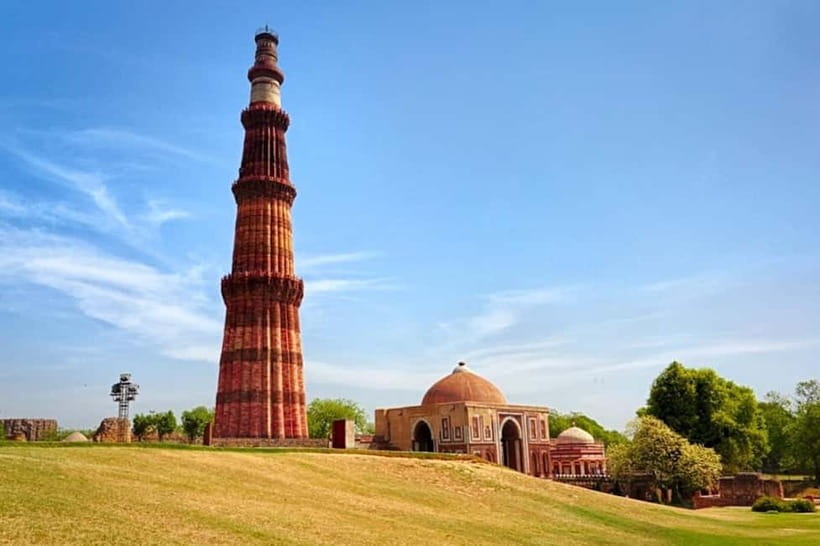
- 73-meter Qutub Minar views right at the base, with multiple storeys to compare
- Mamluk carvings and geometric patterns plus Arabic inscriptions you can actually read with help
- Quwwat-ul-Islam Mosque details, including arched gateways and repurposed pillars
- The rust-resistant Iron Pillar, a standout metallurgy clue from ancient India
- Alai Darwaza and the story behind the unfinished Alai Minar project
Start at the base: Qutub Minar’s scale hits fast
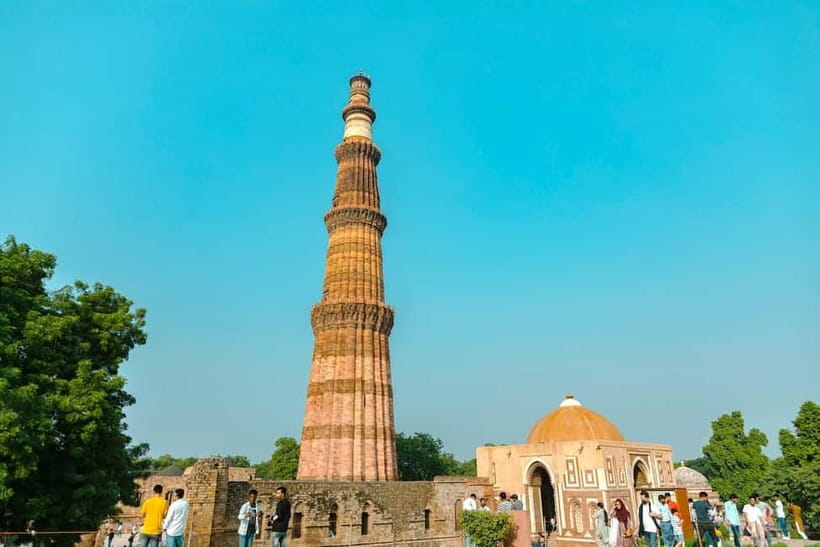
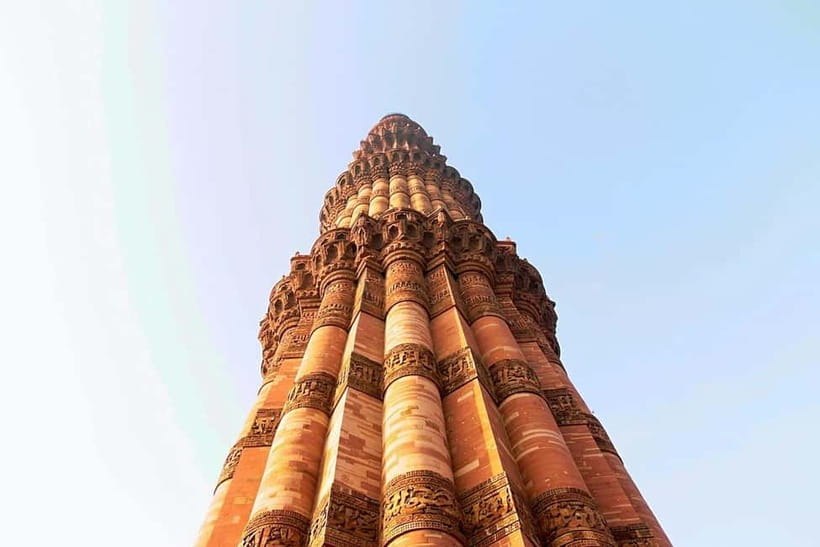
The tour begins the smart way: at ground level, so Qutub Minar stops feeling like a photo and starts feeling like a real structure. The minaret rises about 73 meters and is built from red sandstone and marble, tied to the early 13th century. Even if you think you know what a tall tower looks like, standing beneath it changes your sense of proportion.
What I like here is that you’re not just staring upward. You walk around the monument and get a chance to compare surfaces and layers. The design is not uniform. Different sections of the minaret show distinct choices, and once you’re looking for that variation, the minaret becomes more than a single landmark.
This is also a good test of whether you like architecture. If you enjoy details and want context, this tour rewards you. If you only want a quick skyline check, you may find yourself wishing you had more time at each stop. The upside is the tour length is short enough to fit into many Delhi days.
You can also read our reviews of more walking tours in New Delhi


Mamluk craftsmanship: why the storeys look different
As you circle Qutub Minar, focus on the “why” behind the visuals. The site’s carvings include Arabic inscriptions and geometric patterns, credited to the Mamluk dynasty. Those decorations are not random. They’re part of how the builders expressed identity through ornament.
Then comes one of the most interesting points: the minaret’s storeys don’t all look the same. Successive rulers added and adjusted the structure over time, so each level can feel like a different chapter of design. A guide’s job is to point out those changes in a way you can actually notice, instead of just hoping you’ll spot them on your own.
This is also where the guide you get really matters. A review noted how engaging the guide can be, specifically mentioning Madhuvan. That kind of energy helps you connect what you’re seeing with the complex background behind it, without drowning you in facts.
Quwwat-ul-Islam Mosque: the first mosque in India, and the reused pieces
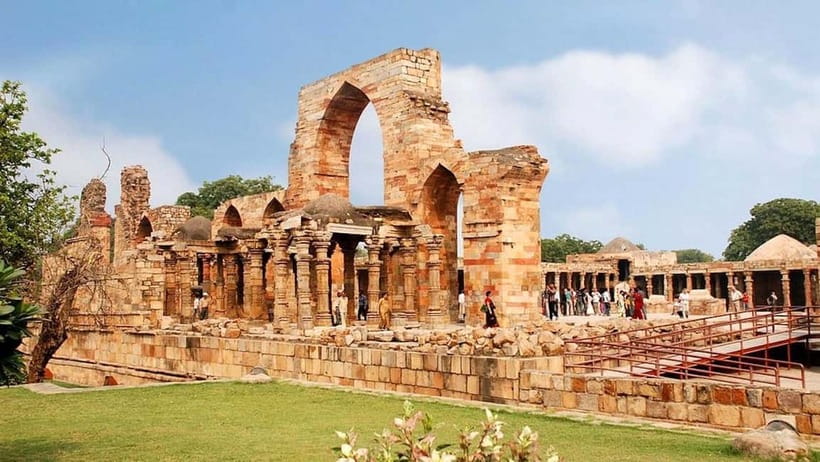
From Qutub Minar, you’ll move to the Quwwat-ul-Islam Mosque, described as the first mosque built in India. The key detail isn’t only that it’s historic. It’s how it looks and what went into making it.
Pay attention to the arched gateways and the pillars. These aren’t presented as pure new construction. Instead, the mosque includes pillars repurposed from earlier Hindu and Jain temples. That reuse matters because it changes how you interpret the site. You’re not looking at a clean break from one culture to another. You’re looking at overlap—materials, forms, and artistic traditions finding new roles.
Even if you’re not a hardcore history person, this stop helps you slow down. Repurposed columns and repeated motifs encourage you to think about continuity and change at the same time. It’s architecture that carries evidence, not just decoration.
The Iron Pillar: rust resistance and the mind-bending part
Next, you’ll see the Iron Pillar, one of the site’s most mysterious attractions. The description calls out its rust-resistant surface, and that’s the hook. You’re staring at a pillar that has survived in a way that invites questions about early metallurgy and technique.
What I think makes this stop valuable is that it breaks the rhythm. You’ve been focused on towers, carvings, and gateways. The Iron Pillar pulls you toward something more scientific: materials, durability, and why an object lasts.
This is also a great moment to ask your guide a simple question like: what makes this pillar stand out in the story of the complex? A good guide can connect it to the idea that ancient Indian craft wasn’t just decorative—it could be engineered. And since you’re there in person, you can examine the pillar’s finish and condition with your own eyes.
Alai Darwaza and the unfinished Alai Minar
Toward the later part of the walk, you’ll reach Alai Darwaza and the nearby unfinished Alai Minar. These two stops work well together because they give you two angles on ambition.
Alai Darwaza is known for Indo-Islamic architecture, and the draw is in how styles combine. Expect strong visual structure and an architectural feel that’s more than copy-paste from one tradition. It’s the kind of doorway that makes you want to pause and actually look at proportions and ornament.
Then you turn to the unfinished project: the Alai Minar, described as ambitious but abandoned. This is not a wasted stop. It’s a reminder that history includes projects that stop mid-sentence. When you’re standing near something incomplete, you start noticing what would have been built next, and you get a clearer picture of how changing priorities shape monuments.
If you like your sightseeing with a little human drama—plans, interruptions, and outcomes—this section hits nicely.
You can also read our reviews of more historical tours in New Delhi




How the 2–3 hour format fits real Delhi days
This tour is listed as 2–3 hours, and that range is exactly what you want for Qutub Minar. You’re covering multiple major monuments in one loop: Qutub Minar, Quwwat-ul-Islam Mosque, Iron Pillar, Alai Darwaza, and the unfinished Alai Minar. You don’t need half a day to get the core experience, but you still get time to stop and actually look.
Because it’s a walking tour, treat it like an active visit. You’ll spend the time moving between points in the complex while your guide explains what you’re seeing. If you’re the type who likes to linger, you may end up wanting just 15–20 extra minutes at your favorite stop. Still, the short duration helps you avoid fatigue and keeps the day flexible.
The format is also private group, which usually means you can ask questions without feeling rushed by a big crowd. In a site with lots of fine detail, that matters.
Price and value: what $9 buys beyond the big photo
At $9 per person, this tour is priced like a budget-friendly way to get professional context. The important part is what’s included: a professional tour guide is part of the package. For a place like Qutub Minar and its surrounding monuments, that guide is doing real work—turning carvings, inscriptions, and architectural changes into understandable takeaways.
There’s also an option for transfer in a private car, but only if you select it. So your value will depend on whether you want that add-on. If you’re planning your own transport, you can still get the core value from the guide and the walking route.
One more value note: many UNESCO sites can feel like a list of buildings unless you know what to look for. Here, the stops are connected by themes—dynasty design, religious architecture, reused materials, metallurgy, and interrupted ambition. That makes the visit feel like a story instead of a checklist.
If you want a low-cost way to see multiple highlights with enough explanation to make them stick, this is the right kind of deal.
Who should book this tour (and who might not)
I’d book this if you:
- Like architecture and want help spotting what matters
- Prefer short tours that still cover several key sites
- Want English or Hindi explanation from a live guide
- Like the idea of a private-group pace
You might skip it if you:
- Only want a quick photo stop and don’t care about the details
- Need a very long break schedule, since the visit is designed as a walk that runs about 2–3 hours
One more plus: it’s listed as wheelchair accessible. So if mobility is a concern, this is worth considering, though you should always plan around your comfort level with site conditions.
Should you book the Qutub Minar walking tour?
If you want the best chance to understand what you’re seeing at Qutub Minar, Quwwat-ul-Islam Mosque, the Iron Pillar, and both Alai Darwaza and the unfinished Alai Minar, this tour is a strong yes. The price is low, but the guide-led interpretation is the real value. And if you’re the type who gets more out of history when someone points at the details, you’ll likely enjoy how the stops connect.
On the other hand, if your goal is only a quick scenic hit, you might find the walking and explanation slightly more than you need. For most people though, this is a practical way to get a meaningful UNESCO visit without burning half a day.
FAQ
How long is the Qutub Minar UNESCO World Heritage Site walking tour?
It runs for 2 to 3 hours.
How much does the tour cost?
The price is $9 per person.
What is included in the tour?
The tour includes a professional tour guide. If you select it, a transfer in a private car is also included.
Is this tour private?
Yes, it’s listed as a private group.
What languages will the live tour guide speak?
The live guide is available in English and Hindi.
Is the tour wheelchair accessible?
Yes, the tour is listed as wheelchair accessible.
Does the tour include transfers by private car?
A private car transfer is included only if you select the option.
Can I cancel and get a refund?
Yes. You can cancel up to 24 hours in advance for a full refund.
Can I reserve now and pay later?
Yes. It offers reserve now & pay later, so you can book without paying today.