REVIEW · VARANASI
Evening Boat Ride
Book on GetYourGuide →Operated by Sachan Tours · Bookable on GetYourGuide
A boat at dusk changes everything. From Assi-ghat you float past major Varanasi ghats, with the most revered cremation site, Manikarnika-ghat, appearing as the lights fade and the rituals feel close.
What I like most is the combination of big views and real explanation. I found it easier to understand what you’re seeing because the English guide, including Karan, connects the holy river to each ghat’s meaning. The main drawback is that the cremation at Manikarnika can be intense for sensitive stomachs or anyone uncomfortable with death rituals.
In This Review
- Key things to know before you go
- From Palace on Ganges to Assi-ghat: finding the start fast
- The 2-hour Ganges loop: what the ride really feels like
- Assi-ghat: where the cruise energy begins
- Tulsi-ghat and Harishchandra-ghat: the meaning behind the names
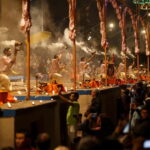
- Dashashwamedh-ghat: where the spectacle and spirituality meet
- Manikarnika-ghat at dusk: the cremation view you can’t forget
- The English guide (Karan): why the story sticks
- What else you’ll notice along the water
- Price and value: is $31 fair for this 2-hour night ride?
- Who should book this boat ride, and who should think twice
- Practical tips to make your evening smoother
- Should you book the Evening Boat Ride on the Ganges?
- FAQ
- How long is the evening boat ride?
- Where does the boat ride start?
- What is the meeting point?
- How much does it cost?
- What ghats are included in the route?
- Is there a live guide?
- Is food or drinks included?
- Does the price include hotel pickup or drop-off?
- Can I cancel and get a refund?
Key things to know before you go
- Assi-ghat departure from the Palace on Ganges area, near the left corner toward Assi-ghat
- 55+ ghats in about 2 hours, including Tulsi-ghat, Harishchandra-ghat, Dashashwamedh-ghat, and Manikarnika-ghat
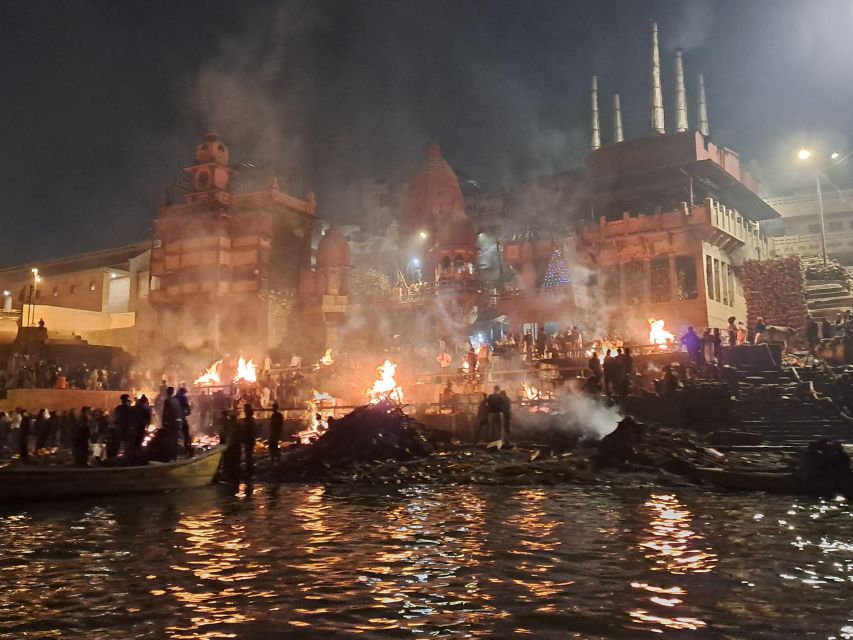
- Manikarnika-ghat at dusk gives a rare view of Hindu cremation rituals and strong flames from the pyres
- English live guide helps you connect names, history, and what devotees are doing
- Photo-friendly timing built into the flow, with space to capture the evening mood
- Small-boat feel, so you watch daily life from a closer angle than most crowds
From Palace on Ganges to Assi-ghat: finding the start fast
This evening cruise starts at the Assi-ghat area, with the meeting point at the Palace on Ganges. It’s described as a famous hotel on the left corner toward Assi-ghat, so plan to arrive with a little cushion. In Varanasi, the difference between on-time and slightly early is often the difference between smooth and stressful.
Once you’re at the water, the whole evening experience clicks into place. You’re not trying to interpret a maze of steps from land. You’re stepping into the river-view rhythm immediately, with the city laid out in layers.
You can also read our reviews of more boat tours in Varanasi

The 2-hour Ganges loop: what the ride really feels like
The tour is 2 hours, and that matters. It’s long enough to feel like a full evening outing, but short enough that you don’t have to commit your whole night. In practice, it’s paced so you can take in both the quiet beauty of the ghats and the emotionally heavy parts without burning out.
The boat covers more than 55 ghats, including some of the most famous names along the river. That’s the big value here: you get a guided highlight reel from the water rather than hopping around the city. And because you’re moving, the views keep changing every few minutes.
I also like the “different angle” effect. Standing at a ghat gives you a side view of life on the steps. From the boat, you see the city as a continuous riverfront story, with buildings and temple shapes framing the shoreline. It’s serene in the dusky light, but never calm in the sense of being empty.
Assi-ghat: where the cruise energy begins
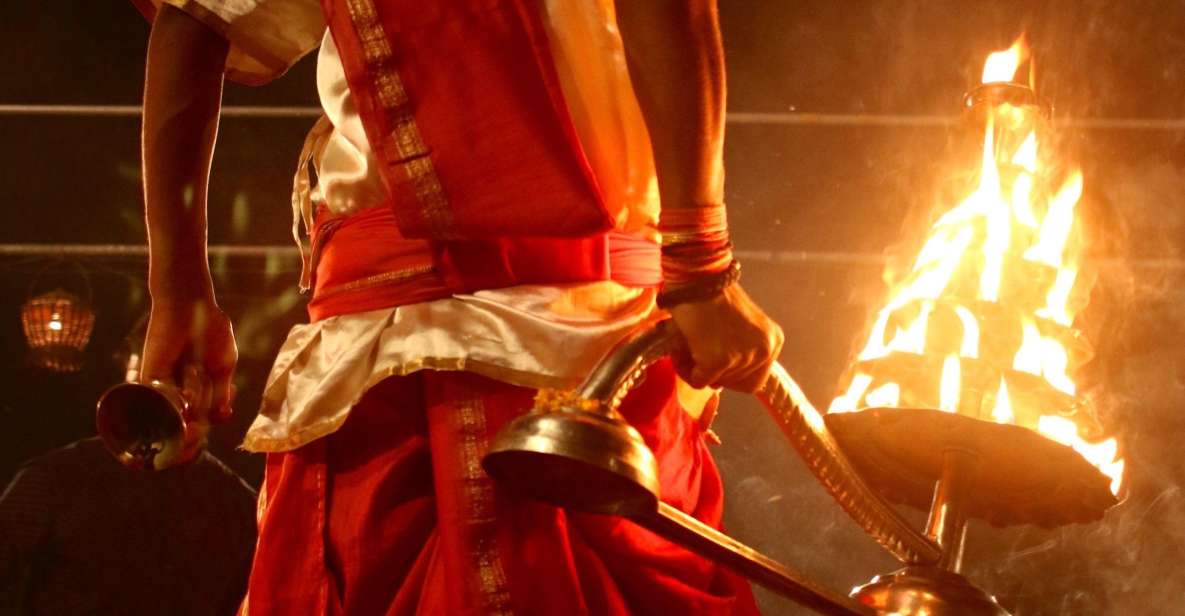
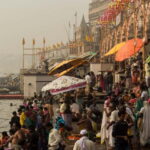
Your evening starts at Assi-ghat, one of Varanasi’s well-known ghats. Starting here sets the tone: you’re immediately in the main visual corridor of the city’s river life.
From the boat, Assi-ghat feels like a launchpad into the rest of the ghats. You’ll likely notice how the riverfront isn’t just scenery. People are using it. That makes the ride feel grounded, not like a staged show.
One practical thought: once you’re on the water, you’re close to what’s happening on shore. If you want photos, keep your camera ready early rather than waiting. The light shifts quickly after sundown, and the boat is already moving.
Tulsi-ghat and Harishchandra-ghat: the meaning behind the names
A major reason this tour rates well is that the guide makes the names useful. You’re not just passing famous ghats. You’re learning what they represent and why the river is treated as sacred.
As the boat goes along, you pass Tulsi-ghat and Harishchandra-ghat—both part of the stretch that gives Varanasi its identity. Even when you’re only catching them for brief moments, the guide’s explanations help you connect the dots between the steps, the rituals, and the broader spiritual purpose.
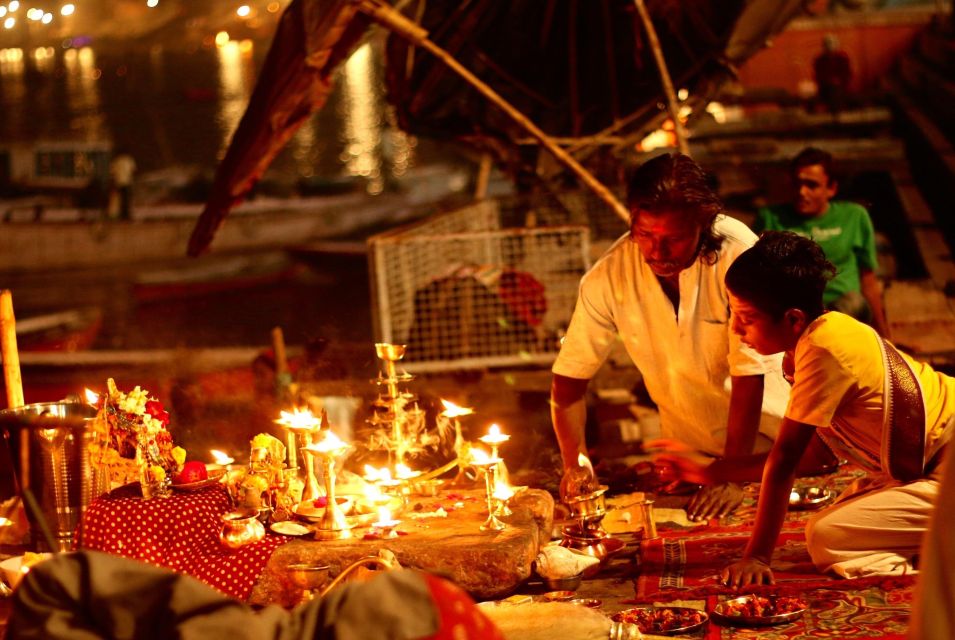
The vibe here can be moving in a subtle way. At some points, it feels peaceful: people bathing, lamps near the water, and the shoreline holding steady in the evening air. At other points, it’s clear that this is a living religious city, with tradition continuing night after night.
Dashashwamedh-ghat: where the spectacle and spirituality meet
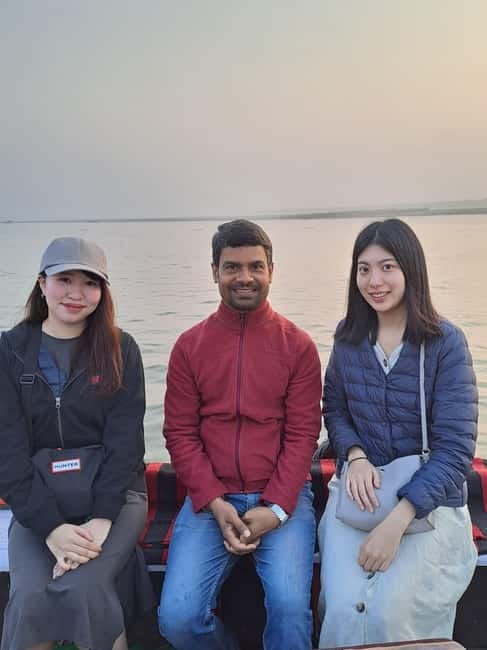
You’ll also pass Dashashwamedh-ghat, one of the most famous ghats in Varanasi. This is where the visual intensity ramps up. The shoreline can feel like it’s humming, and the guide’s context keeps it from becoming mere sightseeing.
From the water, Dashashwamedh-ghat gives you an excellent sense of scale. You see how dense the riverfront activity can be, and how the ghats function as meeting points as much as sacred spaces.
If you’re the kind of traveler who likes to understand what you’re seeing, this stretch is a strong payoff. The guide explains the importance of the holy river and the distinct role of each ghat, so you can look at a name onshore and actually know what it means.
You can also read our reviews of more evening experiences in Varanasi

Manikarnika-ghat at dusk: the cremation view you can’t forget
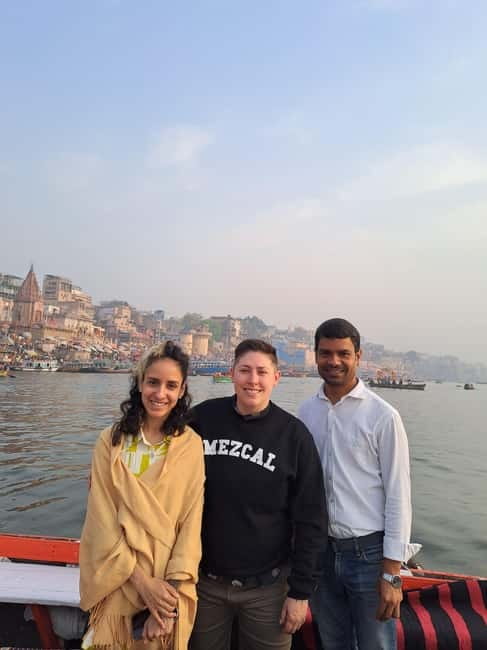
Now comes the part many people remember most: Manikarnika-ghat, the most venerated crematorium for Hindus. The boat ride can give you goosebumps—because you’re not watching from a distance. You see the flames of the fire coming out of the pyres as rituals take place.
This is not a casual stop. It’s an emotional experience, and the guide’s explanation matters because it frames the scene in a religious and cultural context. You’re watching how people respond to mortality, and it can hit you harder than you expect.
If you choose this tour, go in with open eyes. You’re seeing a sacred ritual, not a tourist performance. The flames can be striking, and the moment of realizing what’s happening can feel heavy.
A consideration: if you’re sensitive to death rituals, this may feel too much. Even though the boat format is more controlled than wandering through the steps, the subject matter is still very real.
The English guide (Karan): why the story sticks
The guide is a big part of the value. People highlight the way Karan organizes the tour and the fact that the explanations are both informative and human. You’ll spend time learning the importance of the holy river, the purpose of different ghats, and why rituals continue the way they do.
One reason this kind of tour works is that it turns quick views into something you can carry home. A boat gives you speed and range. The guide gives you meaning.
Karan is also praised for being attentive with photography. If you like taking pictures, the ride has room for that without constantly breaking the flow. That’s useful because on the water, stopping to fumble with settings means you lose the best light.
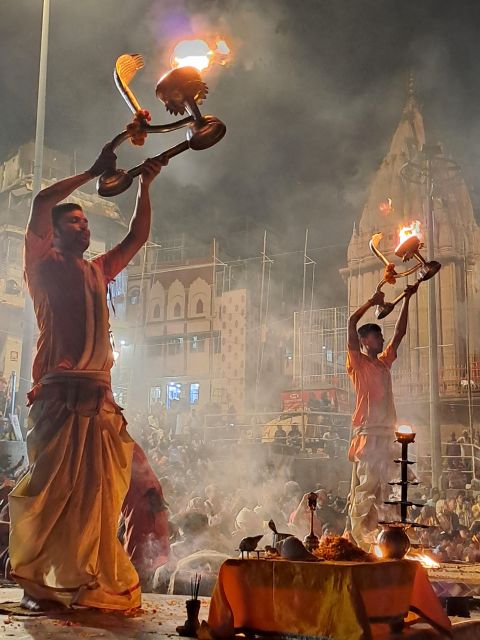
There’s also mention of the atmosphere feeling supported by song at times. Even if you don’t expect it, the spiritual tone is part of how the evening unfolds along the ghats.
What else you’ll notice along the water
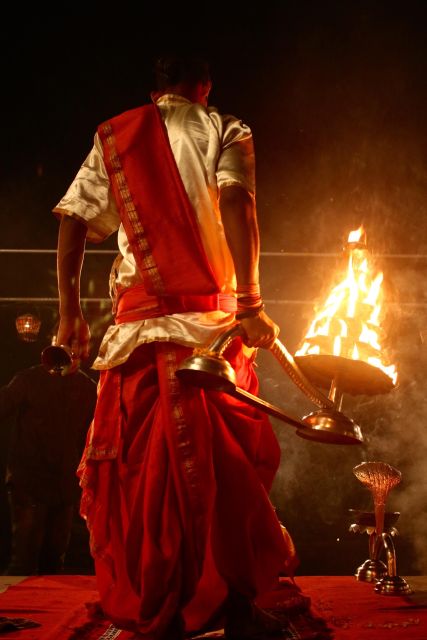
Even when the ghats are the stars, the ride includes the everyday details that make Varanasi feel alive. You may see people bathing in the river while the city’s rituals continue. That contrast—between daily life and ceremonial life—creates the emotional complexity of the evening.
You’ll also get the sense that this place isn’t new. Sacred hymns have been chanted for ages, and devotees have performed rituals for unknown times. That long continuity shows up in the rhythm of the ghats, not in a classroom lecture.
And because the boat covers many ghats, you can spot patterns. You’ll likely notice that the riverfront isn’t just one kind of activity repeated. Different ghats mean different functions, and the guide helps you see those differences as you go.
Price and value: is $31 fair for this 2-hour night ride?
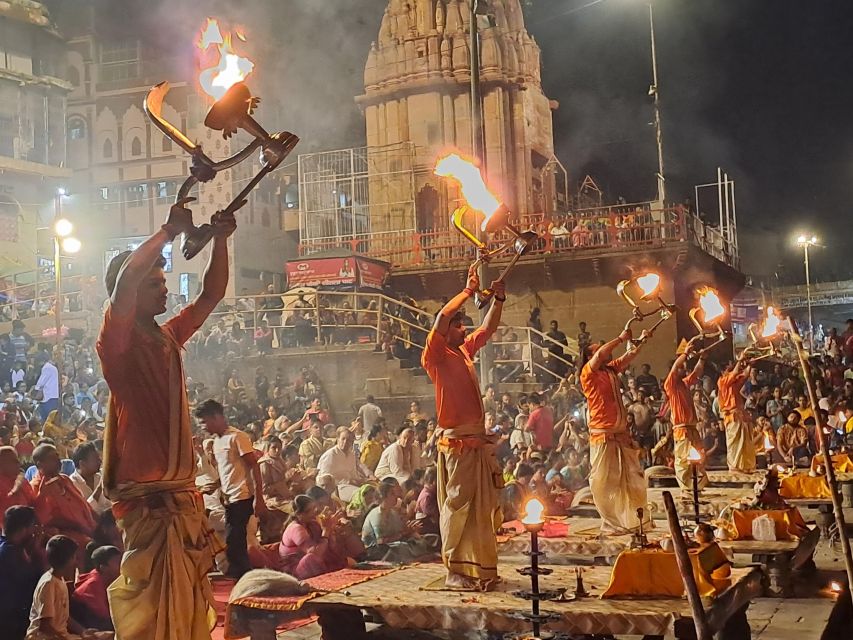
At $31 per person for a 2-hour guided boat tour, the value comes from three things: range, context, and time.
Range: covering 55+ ghats in a single outing is efficient. You’re not spending your evening bouncing between separate viewpoints. You’re moving continuously along the key riverfront.
Context: the live guide in English turns passing sights into explanations you can actually use. That matters here, especially for Manikarnika-ghat, because understanding the ritual changes how you experience what you’re seeing.
Time: two hours is a sweet spot. You get night views and the emotional payoffs without losing your whole evening. It’s also a workable length if you’re tired from exploring during the day.
What’s not included is straightforward: no hotel pickup or drop-off, and you’re on your own for food and drinks. If you’re expecting the ticket to cover everything, plan a little buffer. If you want an evening on the river with guided meaning, the pricing makes sense.
Who should book this boat ride, and who should think twice
This tour suits you if you want Varanasi in a condensed, guided form. If you like strong contrasts—beautiful dusky river views paired with the reality of cremation rituals—you’ll probably find the experience memorable in a good, honest way.
It also fits travelers who care about explanation, not just photos. A good guide makes the difference between seeing ghats and understanding why the riverfront matters.
Think twice if you dislike intense religious death rituals. Even though the boat approach helps you watch without navigating crowds on land, Manikarnika-ghat is central to the itinerary, and the cremation view is a highlight for many people for exactly that reason.
Practical tips to make your evening smoother
Bring the basics that help on the river: comfortable clothes, a camera or phone you’re ready to use quickly, and a calm mindset. Lighting changes fast, and the tour moves at the pace of the boat, not your comfort level.
If you’re sensitive to heat, flames, or strong visuals, consider how you personally handle intense scenes. Some people are fine, others need distance. This ride gives distance compared to walking closer, but it still brings you into the line of sight.
Also, show up near the meeting point on time. The meeting point is tied to the Palace on Ganges by the left corner toward Assi-ghat, and getting there confidently beats trying to figure it out once the evening has fully started.
Should you book the Evening Boat Ride on the Ganges?
I’d book this if you want a guided, high-impact evening that shows you Varanasi from the water and gives you the meaning behind the ghats. The strongest reason is the combination of 55+ ghats, a clear English guide, and the unforgettable inclusion of Manikarnika-ghat.
I’d skip it only if the cremation viewing is something you know will overwhelm you. If that’s a concern, you can look for a calmer river option that avoids that specific stop.
FAQ
How long is the evening boat ride?
The duration is 2 hours.
Where does the boat ride start?
It starts from Assi-ghat in Varanasi.
What is the meeting point?
The meeting point is the Palace on Ganges hotel, described as on the left corner toward Assi-ghat.
How much does it cost?
The price is $31 per person.
What ghats are included in the route?
The boat covers more than 55 ghats, including Tulsi-ghat, Harishchandra-ghat, Dashashwamedh-ghat, and Manikarnika-ghat.
Is there a live guide?
Yes, there is a live tour guide and the tour language is English.
Is food or drinks included?
No. Food and drinks are not included.
Does the price include hotel pickup or drop-off?
No. Hotel pickup and dropping are not included.
Can I cancel and get a refund?
Yes. You can cancel up to 24 hours in advance for a full refund.