REVIEW · VARANASI
From Varasani: Private Half Day Tour to Sarnath
Book on GetYourGuide →Operated by INDIATOR · Bookable on GetYourGuide
Sarnath is holy, but it moves fast. This private half-day tour (about 4 hours) takes you from Varanasi to the Buddhist pilgrimage ground around 10 km away, with a driver, an English-speaking guide, and a tight route built around major teaching sites like Dhameka Stupa. It’s a great way to get context without eating up your whole day.
I like how the tour is structured so you’re not just wandering stones. You get guided stops at the big monuments plus the Sarnath museum, so the story behind the ruins actually lands. The comfort also matters: you’re in a private, air-conditioned car for the hotel-to-site transfers.
One possible drawback: the tour price only feels fair if everything promised is truly covered and your guide’s English works for you. The half-day format is also brisk, so you’ll want to make sure the key stop at Mulagandhakuti Vihara (with wall paintings) isn’t skipped and that you’re not surprised by any extra entry costs on the ground.
In This Review
- Key takeaways before you go
- Why Sarnath is a smart spiritual stop near Varanasi
- 11:00 pick-up and the AC ride out of Varanasi
- Dhameka Stupa: the first-sermon storytelling moment
- Chaukhandi Stupa and the feel of historic ruins
- Sarnath Archaeological Museum: where you can see the evidence
- Lion Capital of Ashoka: a surprising national emblem moment
- Mulagandhakuti Vihara and its wall paintings
- Price and value: what $40 covers in real life
- What kind of traveler should book this private half-day
- Should you book Varasani’s private tour to Sarnath?
- FAQ
- What time does the Sarnath tour start?
- How long is the tour?
- What’s included in the price?
- Is the tour only for English speakers?
- Where does the tour start and end?
- Are there any costs not included?
Key takeaways before you go
- Dhameka Stupa: focus on the moment of the first sermon after enlightenment
- Sarnath Archaeological Museum: artifacts help you separate legend from history
- Lion Capital of Ashoka: you see India’s national emblem during a Buddhist visit
- Mulagandhakuti Vihara: plan on wall paintings, not just a quick pass-by
- Private AC transfer: a real quality-of-life upgrade in a 4-hour window
Why Sarnath is a smart spiritual stop near Varanasi
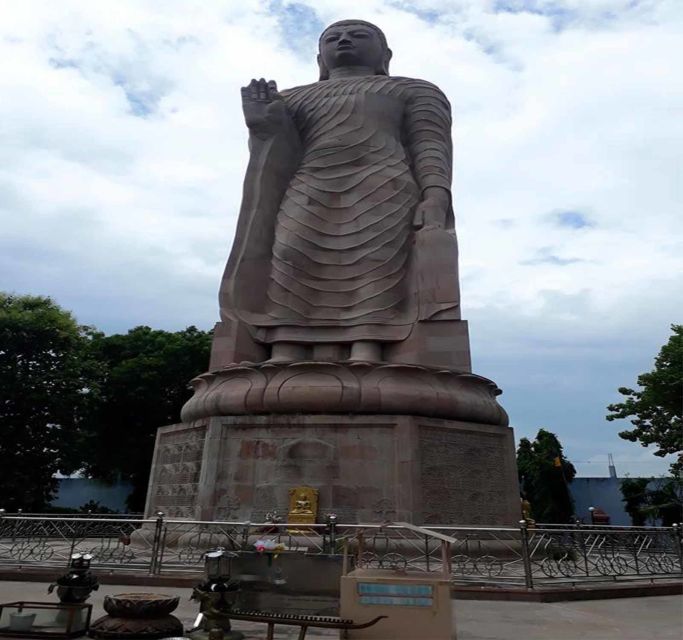
Sarnath is one of Buddhism’s four supreme pilgrimage sites, which already tells you it’s not a random “nice ruins” detour. It’s tied to major early moments of the faith, especially the period right after Siddhartha became the Buddha. When you visit with a guide, you’re not just looking at monuments—you’re seeing why people have traveled here for centuries.
There’s also a practical advantage: Sarnath is close enough to Varanasi that you can do it as a half-day. That matters if you’re on a tight schedule, or if you prefer to keep your energy for the evening (ghats, dinner, walking time, all that). In other words, this tour gives you a high-impact cultural hit without turning your trip into one long marathon.
You can also read our reviews of more private tours in Varanasi
11:00 pick-up and the AC ride out of Varanasi
The tour starts at 11:00 am, with hotel pick-up in Varanasi and drop-off back at your hotel after the visit. You ride in a private, chauffeur-driven, air-conditioned vehicle—useful on hot days, and also just easier than haggling for transport when you only have a few hours.
Sarnath is about 10 km from Varanasi, so the driving time is usually reasonable. The bigger question is how much time you’ll get at each stop. In a 4-hour private tour, you should expect steady pacing, not museum-strolling for an hour at a time. If you like to linger, ask your guide for a slightly slower rhythm early on—because by the time you reach the end, it’s hard to “buy back” time.
This is a private group, so you’re not being rushed by other schedules in the way you might be on a larger group tour. Still, the route is designed for a half-day, so your best strategy is simple: go in knowing which stops are non-negotiable for you (for many people, it’s Dhameka Stupa and the museum).
Dhameka Stupa: the first-sermon storytelling moment
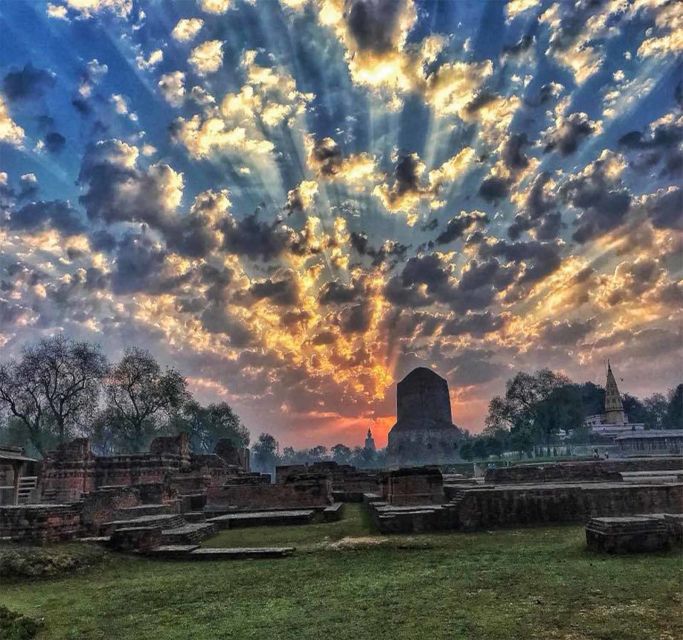
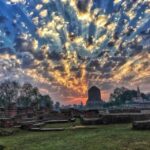
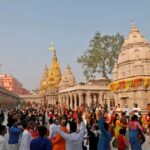
Dhameka Stupa is the headline stop. The tour route is built around the idea that this is where Buddha delivered his first sermon after attaining enlightenment. Even if you’ve read about it, seeing the structure in place changes the experience. You start to understand why pilgrims keep returning: this isn’t abstract history.
What to do during this stop:
- Look for the monument’s scale and placement. The physical presence is part of the message.
- Pay attention to what your guide says about early Buddhist teaching and why the site became a pilgrimage magnet.
- Take a few minutes to observe the surroundings, not just the main structure. There’s a “holy gravity” to how the area is set up for visitors.
A good guide makes the difference here. Without guidance, Dhameka Stupa can feel like one impressive stupa among many. With guidance, it becomes a waypoint in a real storyline.
Chaukhandi Stupa and the feel of historic ruins
From Dhameka Stupa, the tour continues to Chaukhandi Stupa, another major stop at Sarnath. Then you’ll spend time among the rustic ruins of Buddhist monuments tied to important teachings.
This portion can be surprisingly meaningful if your expectations match the reality of ruins. You won’t always get “fully intact” sights. Instead, you get something more honest: the sense of how a sacred landscape evolved over time, with later generations adding layers, restoring ideas, and preserving what they could.
Here’s how to get value from this part:
- Let the guide connect the ruins to teachings you can recognize. The goal isn’t memorizing dates; it’s understanding purpose.
- Notice how ruins are organized. Even without perfect reconstruction, the layout often shows what builders intended visitors to see.
This is also where the half-day pace can feel a little tight. If you’re the type who loves photos and wants a long visual sweep, ask for an extra couple minutes early—because later you may be moving on quickly to the museum.
Sarnath Archaeological Museum: where you can see the evidence
Next comes the Sarnath Archaeological Museum, a key part of making your visit feel grounded instead of purely ceremonial. The tour is designed so you’re not only looking at monuments—you’re also seeing artifacts that support the story.
Why this stop is worth your time:
- Museums slow you down in the right way. They turn vague impressions into identifiable objects.
- Relics and historical remnants help you connect the “why” behind the site’s status.
If your guide is good (and your English understanding is smooth), the museum is where you get the most payoff per minute. If not, still try to focus on the big themes: what’s preserved, what those objects suggest about early Buddhist life, and how the museum frames the site’s development.
Also, keep your eyes open for how your guide explains the progression from outdoor monuments to inside exhibits. When a guide makes that connection clearly, the whole day clicks.




Lion Capital of Ashoka: a surprising national emblem moment
You’ll also stop by the Lion Capital of Ashoka. This is the national emblem of India, which makes it a fascinating bridge between religious heritage and national identity.
It’s easy to miss the meaning if you treat it as just another photo spot. Instead, think of it like a quiet reminder that Sarnath isn’t isolated. Buddhist symbols shaped art and identity across regions, and India’s emblem traces back to that symbolic tradition.
I like this stop because it prevents the tour from becoming one-note. You’re still in a Buddhist pilgrimage setting, but you also see how wider Indian symbolism intersects with it. In a short tour, that’s a big value point.
Mulagandhakuti Vihara and its wall paintings
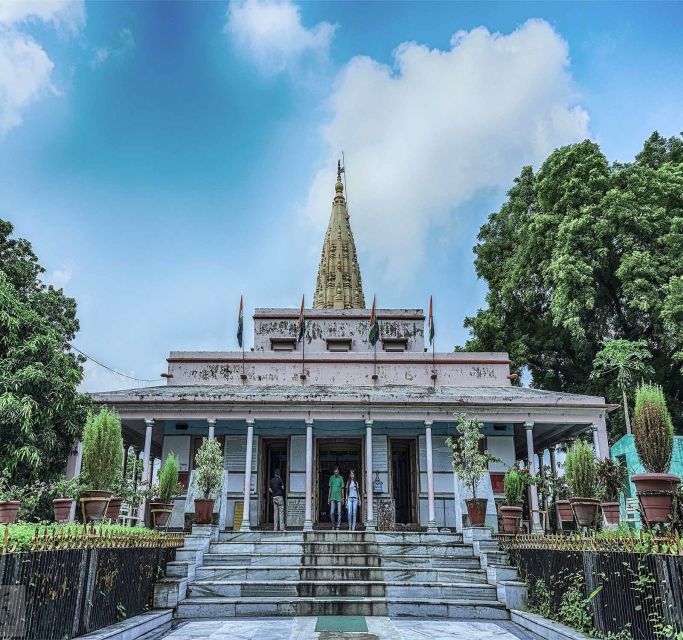
The last major named stop is Mulagandhakuti Vihara, described as a monastery with beautiful wall paintings. This part can be the most emotionally resonant, because paintings tend to feel immediate. They also give you a different texture from the outdoor stupas and the museum’s more catalog-style presentation.
A practical tip: in a half-day, it’s worth confirming you’ll actually spend enough time here to notice the paintings, not just pass through the space. This is exactly the kind of stop that gets shortened if a tour is running ahead or the guide is trying to keep the schedule tight.
If wall art is a must for you, tell your guide at the start: I’d like time to see the paintings properly. You’ll feel the difference.
Price and value: what $40 covers in real life
The tour price is listed at $40 per person for a half-day. At that level, you’re paying for four things bundled together:
- a private hotel pick-up and drop-off
- an English-speaking guide
- monument and museum entry fees (as described)
- private, air-conditioned vehicle comfort
That can be good value if the tour actually includes everything it promises and your guide can explain the sites clearly. But if entry fees aren’t covered as expected, or if the guide’s English isn’t strong enough for you to follow the details, the price starts to feel more like a “convenience fee” than a cultural value.
One more angle: the half-day design itself is part of the cost equation. You’re not buying “unlimited time.” You’re buying an organized route and someone to point you in the right direction quickly. If you’re the kind of traveler who enjoys slow wandering, this format may feel rushed. If you want smart structure, it can be just right.
My advice: before you go, mentally treat this as an itinerary with a tight schedule. Then make sure the tour’s two essential quality drivers are working—guide communication and confirmed inclusions for entry fees.
What kind of traveler should book this private half-day
This tour fits best if you:
- want a short, high-impact day near Varanasi
- prefer a private AC ride over sorting transport on your own
- like guided context for religious sites, especially early Buddhist history
- value seeing multiple key landmarks instead of picking only one
It’s less ideal if you:
- want a long, slow museum experience
- need exceptionally strong English interpretation to enjoy the stories
- are extremely budget-sensitive and plan to manage everything independently
Because it’s a private group, you can also benefit from a simple conversation with your guide. Ask what the most important takeaway is for each stop, and whether the schedule allows a few extra minutes where you care most.
Should you book Varasani’s private tour to Sarnath?
I’d book this if you want an efficient half-day that hits the major Sarnath points: Dhameka Stupa, Chaukhandi Stupa, the Sarnath Archaeological Museum, the Lion Capital of Ashoka, and Mulagandhakuti Vihara. The private AC transfer and guide make it feel like someone has already solved the logistics, which is a real gift in India when time is limited.
But do your due diligence on the two things that can make or break value:
- Confirm the entry fees for the sites you’ll visit are truly included as described.
- If your enjoyment depends on a clear English explanation, ask in advance about guide language comfort.
If those pieces look solid, this is a strong way to see Sarnath without wasting your day. If not, you might be better off doing a more flexible plan where you control pace and costs.
FAQ
What time does the Sarnath tour start?
The tour starts at 11:00 am, with hotel pick-up in Varanasi.
How long is the tour?
It lasts about 4 hours.
What’s included in the price?
The tour includes an English-speaking guide, monument and museum entry fees, and hotel pick-up and drop-off in a private air-conditioned vehicle.
Is the tour only for English speakers?
The guide is listed as English-speaking, and the tour language is English.
Where does the tour start and end?
Pick-up is from your hotel in Varanasi, and you’re dropped back at your hotel after the tour.
Are there any costs not included?
Personal expenses during the tour are not included.