REVIEW · JAIPUR
From Jaipur: Praivte Ranthambore Tour By Jeep Canter Safari
Book on GetYourGuide →Operated by Golden Triangle Holidays · Bookable on GetYourGuide
Tiger country, minus the hassle. This one-day Ranthambore trip from Jaipur is built for a smooth, low-stress day: you get picked up from your hotel, ride in a private air-conditioned vehicle, and then go into the park with a government-certified naturalist who knows what to look for.
What I really like is the structure. You arrive in Sawai Madhopur by early afternoon, you get a guided safari in the park, and you have a planned way back to Jaipur that lands you around 8:30 PM, with a chance to stop for food on the drive. One thing to weigh: the safari experience depends on the vehicle you choose and what the wildlife decides to do that day, so tiger sightings are never guaranteed.
And it’s also worth knowing how the viewing works on the ground. If you’re in a canter or if multiple vehicles converge when an animal is spotted, the experience can feel crowded at key moments. Still, even when tigers are quiet, the park is full of other wildlife and birdlife, and your guide’s spotting skills can make a big difference.
In This Review
- Key points worth knowing before you go
- From Jaipur to Sawai Madhopur: what the private ride really buys you
- Jeep vs canter safari: how vehicle choice changes your day
- The guided safari moment: naturalists, forest guides, and reading the park
- What you might see in Ranthambore: more than tigers
- Park timing: morning vs afternoon safaris and seasonal shifts
- Rural Women Craft: a smart way to spend time when the park needs space
- What the schedule feels like: a full day with a clean end point
- Price and value: why $98 can be fair for Ranthambore
- Practical tips that actually help on safari day
- Who this tour fits best (and who should skip it)
- Should you book this Ranthambore jeep or canter tour from Jaipur?
- FAQ
- How long is the drive from Jaipur to Ranthambore
- What time does the safari start on this day trip
- Is the safari done in a jeep or a canter
- Are park entrance tickets included
- Are meals included
- What do I need to bring
Key points worth knowing before you go
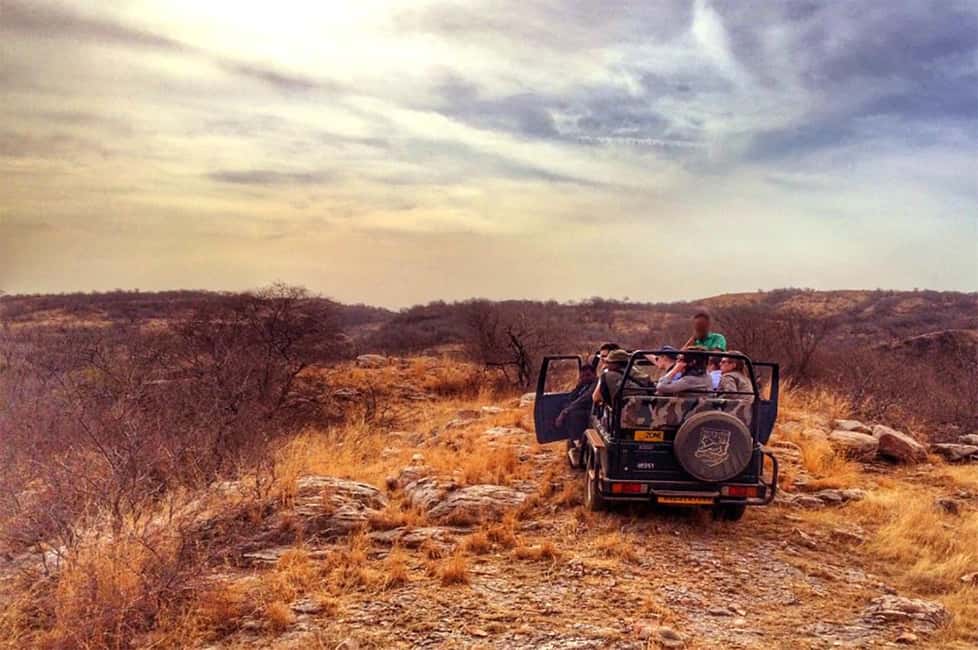
- Private AC pickup and drop-off in Jaipur means fewer moving parts on a long day.
- Jeep vs canter choices affect how personal your safari feels and how close you may sit.
- Government-certified naturalist + forest area guide helps you read the park, not just watch from the road.
- Two daily safari blocks (morning/afternoon) vary by season, so your timing matters.
- Rural Women Craft stop gives you meaningful local shopping tied to village work.
- Wildlife is unpredictable, but you can still expect varied sightings like deer, monkeys, birds, and crocodiles.
From Jaipur to Sawai Madhopur: what the private ride really buys you
This is the kind of day trip that works because the logistics are handled. You start with pickup from your hotel in Jaipur (or another spot in the city), and you’re in a private, air-conditioned vehicle with bottled water on board. That may sound basic, but on a long-distance safari day, comfort and simple timing matter more than you’d think.
The drive is listed at about 3 to 4 hours each way. In real terms, that means you’re not spending your morning figuring out transport, negotiating rides, or timing ticket lines. You just go. One driver experience stood out for several guests—Maliq was repeatedly praised as a strong communicator and very responsive to schedule needs, and other drivers like Santosh, Manoj, and Nadeem also got credit for being careful, safe, and comfortable on the road.
You’re also not just passing time. The road ride is your buffer—enough time to settle in, get oriented, and arrive without feeling rushed. That matters because Ranthambore safaris run on tight windows set by the park.
You can also read our reviews of more tours and experiences in Jaipur



Jeep vs canter safari: how vehicle choice changes your day
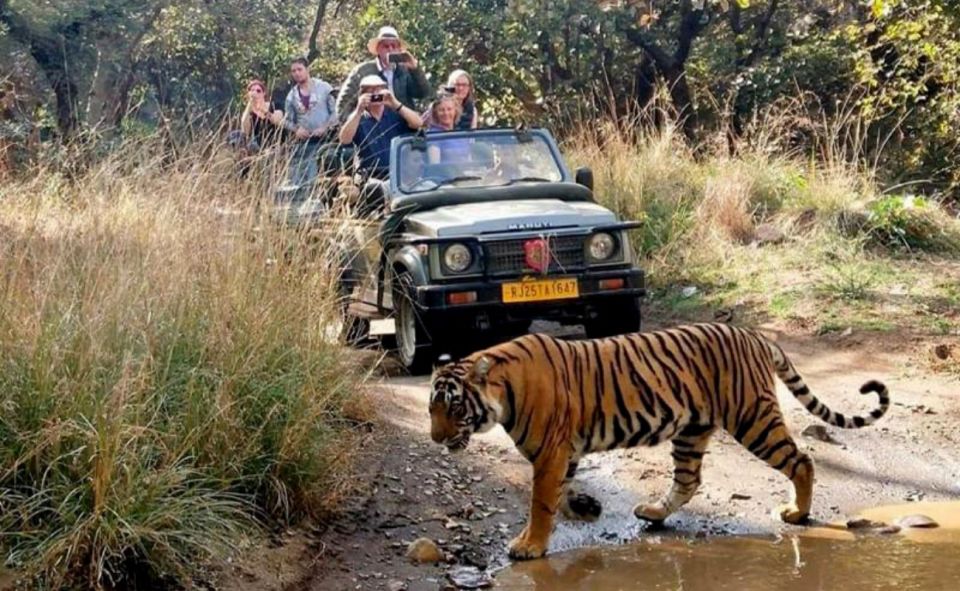
Inside Ranthambore, you’ll either go in an open 6-seater Jeep or a larger canter (the tour offers that option). On paper, both are “safari seating,” but the vibe is different.
Here’s how to think about it:
- Jeep (smaller group): more personal feel, easier to manage comfort, and often better for attention. If your goal is to stay engaged and follow your guide’s instructions closely, a jeep can help.
- Canter (larger group): more social, sometimes slower to coordinate, and you may feel more awareness of others around you when an animal is spotted.
One guest suggestion was pretty direct: if you can book ahead and get the smaller jeep/gypsy style ride, it can improve your odds of seeing tigers closer. That doesn’t guarantee anything—tigers control the pace—but it can affect how you experience the moment.
Also remember that even if your vehicle is reserved for your group, safari vehicles in the park can converge quickly when something is spotted. One review noted that once a tiger is found, multiple buses and jeeps can come together, which can be distracting depending on how people behave. So pick your comfort level: you’ll likely get the thrill either way, but you should know what crowded moments can feel like.
The guided safari moment: naturalists, forest guides, and reading the park
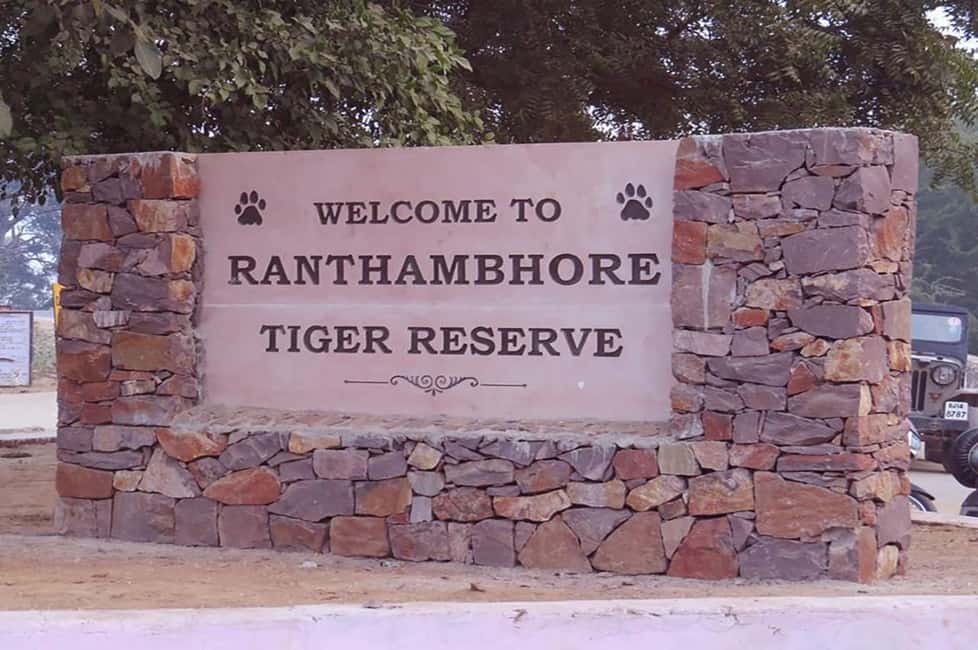
The heart of the day is the safari guided by an experienced, government-certified naturalist (and you also get a forest area guide as included). What that usually means in practice is not just facts—it’s pattern recognition.
Your guide helps you understand the ecosystem, and that’s how wildlife spotting becomes more than luck. Ranthambore’s animals share space with vegetation, water, and seasonal behavior. When you know what to look for, you start noticing deer movement, bird alarm behavior, and the kinds of spots where bigger animals tend to pass through.
The park is also described as a place where history and wildlife coexist—temples and the Royal Fort create a very unique background. It’s one of those settings where even when you’re not locked onto a single animal, the scenery gives context to how long humans and wildlife have been sharing this landscape.
Timing matters too. The plan described for this day trip is an afternoon safari starting around 2:00 PM, after arrival at the park entry point in Sawai Madhopur by about 1:00 PM. That’s useful if you want to avoid the early-morning alarm trap and you’re traveling from Jaipur with limited time.
What you might see in Ranthambore: more than tigers
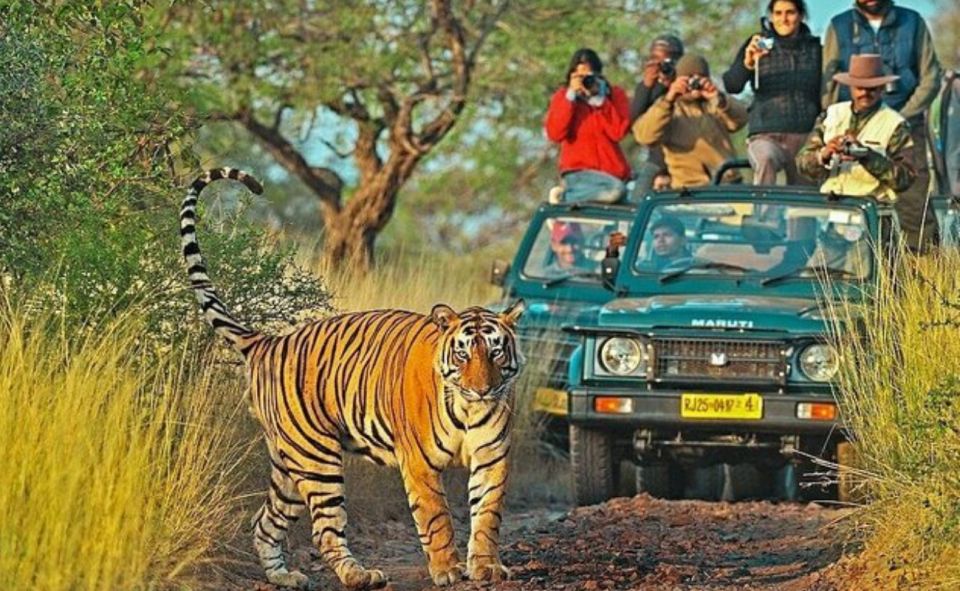
Yes, the tiger is the headline. But Ranthambore works because it’s not a one-animal park.
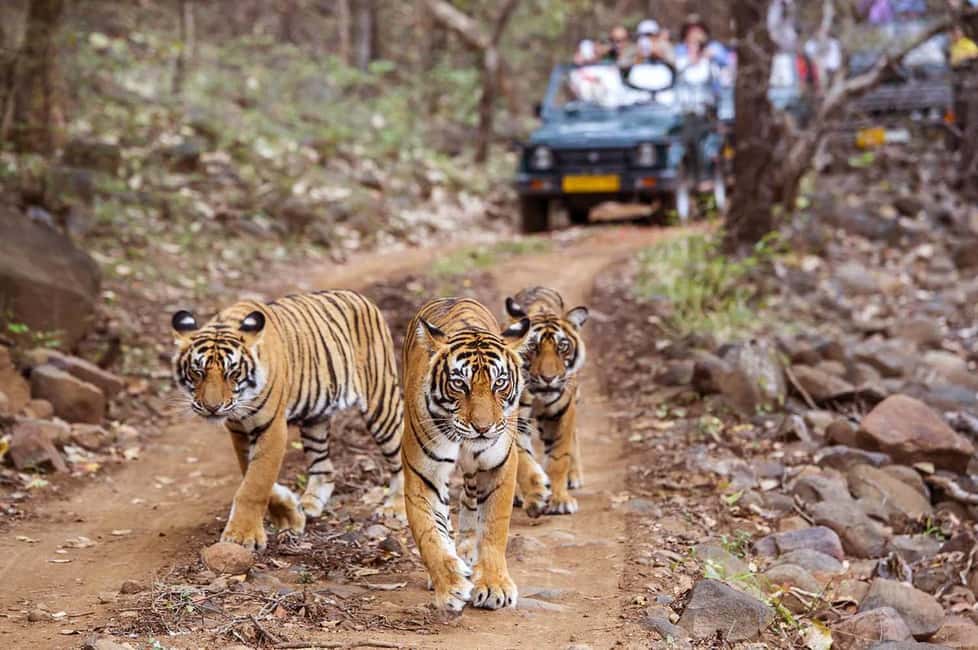
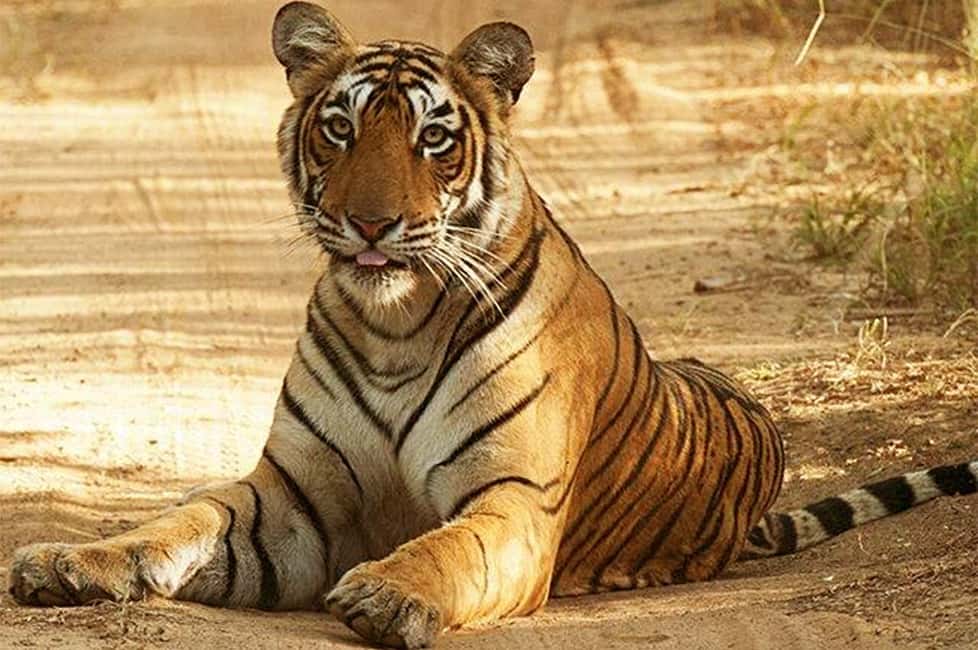
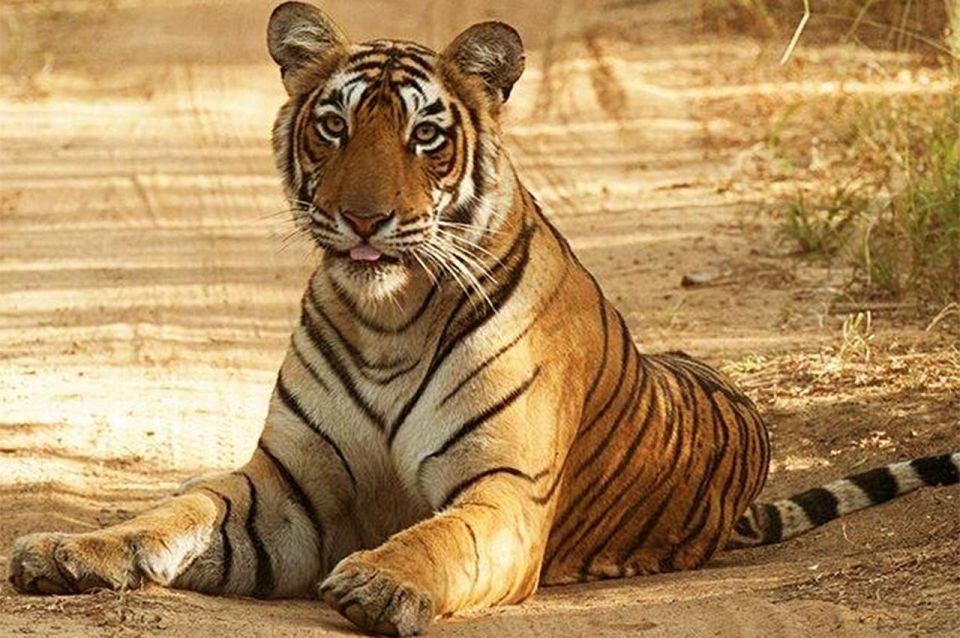
The tour description points out a healthy presence of Bengal tigers along with Indian leopards, sloth bears, and crocodiles. It also highlights abundant birdlife, and the experience is framed around seeing these animals in their natural setting.
Real-world sightings from guests reinforce the variety:
- Some people went tiger-free and still reported a strong experience with other animals like deer, monkeys, and birds.
- Others had the kind of day you remember forever: one guest in zone 3 saw two tigers, and another in zone 5 reported four tigers.
- Safari time also included unforgettable behavior, like one guest describing a tiger hunting activity (even though it didn’t succeed).
If you’re going with realistic expectations, you’ll get more enjoyment. Go for the park, not just the tiger count. Your guide’s job is to help you notice what’s actually happening out there—tracks, movement, and the signals animals give off before you see them clearly.
Park timing: morning vs afternoon safaris and seasonal shifts
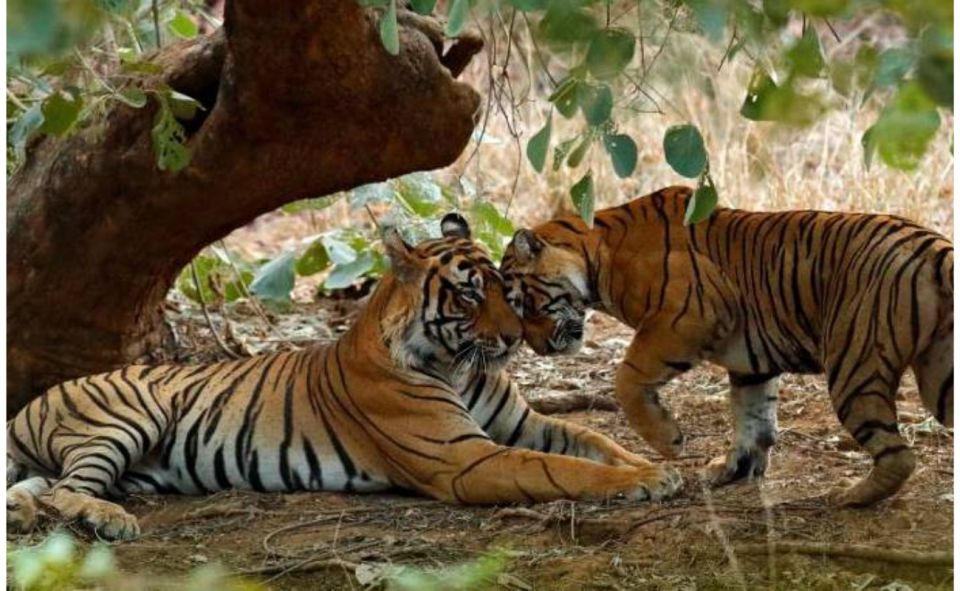
Ranthambore safaris run twice daily, and the official timings shift by season. The data here lists:
Morning safari
- Nov 1 to Jan 31: 7:00 AM to 10:30 AM
- Other months: 6:00 AM to 9:30 AM
Afternoon safari
- Nov 1 to Jan 31: 2:00 PM to 5:30 PM
- Warmer months: 3:00 PM to 6:30 PM or 3:30 PM to 7:00 PM (varies by daylight)
This matters because animal movement changes with heat and daylight. Afternoon schedules also line up well with a Jaipur departure day, because you can spend the morning traveling and still do a full safari window.
For this specific day trip, you’re typically set up for the afternoon program, with arrival by around 1:00 PM and safari starting at 2:00 PM. If you’re comparing options, the biggest practical factor isn’t which name you prefer—it’s which timing fits your energy and comfort level.



Rural Women Craft: a smart way to spend time when the park needs space
There’s more to this day than the safari drive. The plan includes a stop at Rural Women Craft connected to local village work—patchwork, woodwork, and handloom created by women in the area.
Why this stop is worth your time:
- You can pick up unique, eco-friendly craft items with natural colors.
- It’s not just a random shop stop. The work supports local artistry, which feels better than buying a mass-made souvenir.
- It also gives your day a rhythm break. Safaris are active and unpredictable. A craft stop helps you land back on normal human time.
You can usually visit before or after the tiger safari. If you’re trying to keep the day moving smoothly, I’d plan around the safari’s slot and use this stop as your flexible buffer.
What the schedule feels like: a full day with a clean end point
This trip is designed to be one day, not a two-day slog. After the safari, the plan includes time for lunch and then a drive of about 4 hours back to Jaipur, with arrival around 8:30 PM.
One detail to note: meals and drinks are listed as not included, even though the day plan mentions a lunch stop after the safari and craft visit. So in your mind, treat it like this: there will be an opportunity to eat, but you should still budget for your own meal costs.
On the return, there’s also an option to stop for dinner and try local cuisine along the road. That’s a nice touch if you don’t want to eat immediately on arrival.
Price and value: why $98 can be fair for Ranthambore
At $98 per person for a one-day experience, this is positioned as a budget-friendly way to do Ranthambore from Jaipur. The value comes from what’s included, not just the safari itself.
Included items you’re paying for here:
- Hotel pickup and drop-off
- Private AC vehicle
- Entrance tickets in the park
- Option for jeep or canter safari
- Forest area guide
- Fuel, road tolls, and taxes
- Bottled water
- WiFi
- English live guide
If you compare that to trying to piece together transport, park entry, and a guided safari yourself, the bundled approach is often cheaper than you expect—especially when you factor in the hassle of coordinating everything for a specific safari window.
The “value warning” is this: the safari itself can be short depending on the day’s plan and how the park runs. One guest described a safari ride of about 2 to 2.5 hours, even though the overall safari block is described more broadly. That doesn’t mean you got less than promised; it means you should expect tight time inside the park and make sure you’re comfortable with that structure.
Practical tips that actually help on safari day
From the guidance and on-the-ground feedback, the small stuff matters:
- Bring an ID card or passport (requested for what to bring).
- Pack for dust. One guest explicitly recommended bringing a hat or cap and something to cover your mouth and nose.
- Don’t plan on controlling tiger sightings. Tigers can be seen, or they can stay hidden. The best mindset is to enjoy the park’s variety and let your guide work the routes and viewing spots.
- If your top priority is getting closer views, aim for the smaller jeep option when available.
Also, remember that this is not for everyone. If you have mobility limits, you should check suitability carefully.
Who this tour fits best (and who should skip it)
This is a good match if:
- You want one full day that’s organized end-to-end from Jaipur.
- You prefer a private AC ride rather than shared transport for the long drive.
- You like the idea of an English-speaking guide and a naturalist-focused safari.
- You’re visiting with limited time and still want to see Ranthambore National Park.
It may not be ideal if:
- You need wheelchair access. The tour is listed as not suitable for wheelchair users.
- You’re pregnant. The tour is listed as not suitable for pregnant women.
- You hate group dynamics during safaris. Even with private pickup, the safari vehicle can be a canter with other people, and multiple vehicles can gather when animals are spotted.
Should you book this Ranthambore jeep or canter tour from Jaipur?
I’d book it if you want an efficient, straightforward way to do Ranthambore without burning time on planning. The biggest strengths are the private AC transport, the included park entry, and the naturalist/forest guide support that helps you get more from each viewing window. If you’re the type who’d rather rely on local expertise than freestyle logistics, this fits.
I’d think twice if you’re only happy when you see a tiger and you get frustrated by crowded moments when vehicles converge. Wildlife is unpredictable, and that uncertainty is part of the deal.
If you’re okay with that realism, you’ll likely leave happy—either with a tiger sighting or with a memorable day of watching Ranthambore’s other animals and birdlife in a place where temples and wildlife share the same view.
FAQ
How long is the drive from Jaipur to Ranthambore
The drive is about 3 to 4 hours to the Ranthambore entry area near Sawai Madhopur, with a similar timeframe back to Jaipur.
What time does the safari start on this day trip
The schedule described has you arriving in Sawai Madhopur by about 1:00 PM, then starting the safari around 2:00 PM.
Is the safari done in a jeep or a canter
You can choose based on availability: the tour offers an option for an open 6-seater jeep or a larger canter.
Are park entrance tickets included
Yes. Entrance tickets in the park are included in the tour price.
Are meals included
No. Meals and drinks are not included. The day includes time for lunch, but you should plan to pay for what you eat.
What do I need to bring
Bring an ID card or passport. It also helps to be ready for dust on safari day, so plan to protect yourself appropriately.