REVIEW · JAIPUR
Jaipur: Full-Day Tuk-Tuk Sightseeing Tour with Monkey Temple
Book on GetYourGuide →Operated by Jaipur tour travels · Bookable on GetYourGuide
Jaipur is a city where speed matters, and a private tuk-tuk makes you feel like you’re moving with it. I like how the ride puts you close to lanes cars can’t reach, so you get better street views and fewer travel headaches, plus friendly drivers such as Ali and Imran who time the stops around what you want to see. My other favorite part is ending with Monkey Temple at sunset, where the light hits the water tanks and the monkeys look like they own the place.
There is one thing to plan for: you’ll do mild walking at multiple stops (steps at forts and temple areas), and the ride itself is small—an open tuk-tuk holds up to 3 people but it’s most comfortable for 2.
In This Review
- Key things I’d circle before you go
- The real advantage: a private tuk-tuk in Jaipur’s street maze
- Morning focus: Amber Fort and the mirror-work courtyards
- Panna Meena ka Kund: a short stop with big photo payback
- Jal Mahal (Man Sagar Lake): mostly for the viewpoint and the photos
- City Palace in the middle of it all: Rajput and Mughal blend
- Jantar Mantar: UNESCO astronomy you can actually picture
- Hawa Mahal: 953 windows and a breeze you can feel
- Albert Hall Museum and Birla Mandir: contrast, calm, and quick walks
- Monkey Temple (Galta Ji) at sunset: monkeys, steps, and real atmosphere
- Comfort, timing, and the small stuff that affects your day
- Value for money: what’s included at this price point
- Who this tuk-tuk day works best for
- Should you book this Jaipur tuk-tuk tour?
- FAQ
- How long is the Jaipur full-day tuk-tuk sightseeing tour?
- Where does pickup happen?
- What’s included in the price?
- Are meals and entrance fees included?
- Does the tour include skipping ticket lines?
- What should I wear and bring?
- Is it allowed to bring pets, luggage, or large bags?
Key things I’d circle before you go
- Private tuk-tuk access for tight lanes and quick photo pauses
- UNESCO World Heritage hits: Amber Fort and Jantar Mantar
- Iconic skyline views at Hawa Mahal, plus palace courtyards later
- Water stops for photos: Jal Mahal passes by and Panna Meena ka Kund for symmetry
- Monkey Temple at sunset (Galta Ji) for golden light and real temple atmosphere
- English-speaking driver support (some departures also offer guides in other languages)
The real advantage: a private tuk-tuk in Jaipur’s street maze
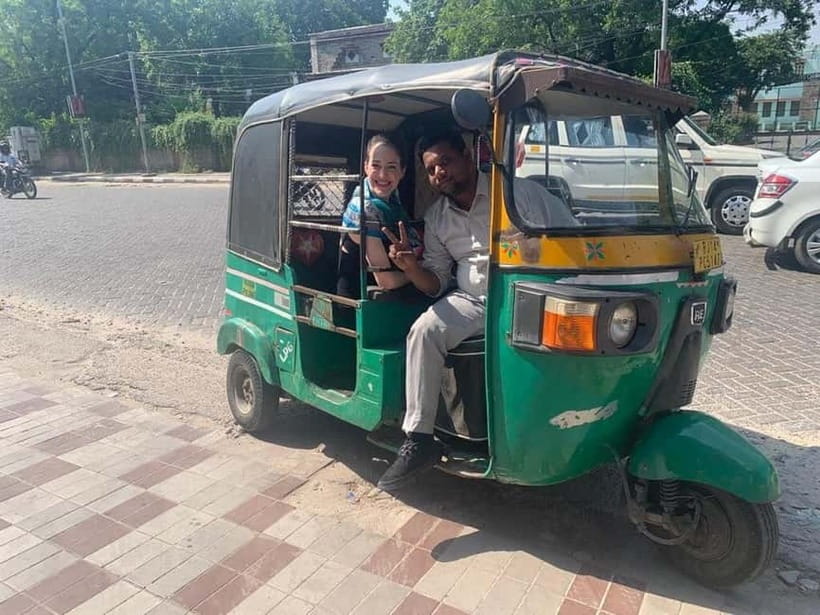
Jaipur’s old-city streets can feel like a living puzzle. One lane is busy, the next lane is narrow, and then suddenly you’re facing a wall of color from a market or a historic facade. A tuk-tuk cuts through that chaos better than a big car.
On this full-day plan, you start with hotel or location pickup and then you’re off in your own vehicle. That matters because you’re not waiting in a group, and you can ask for quick photo stops the moment something catches your eye. In past drives, Ali, Faruk, and Imran were praised for being flexible—helping with timing and even making small errands easier, like pointing you toward a good place to eat or where to go for banking.
The ride is also part of the fun. It’s slower than a rushed car drive, so you actually notice details: carved doorways, painted shop fronts, and the way people move through the day. If you’re the type who likes to watch the city in motion rather than just check boxes on a map, you’ll feel at home.
You can also read our reviews of more tours and experiences in Jaipur
Morning focus: Amber Fort and the mirror-work courtyards
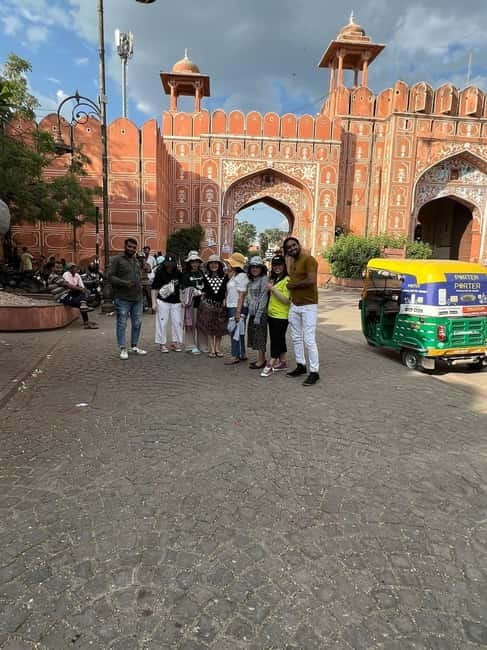
Most days in Jaipur feel like a highlight parade. Amber Fort is the kind of stop that resets your expectations, and it’s scheduled early so the day starts with momentum.
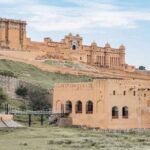
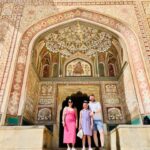
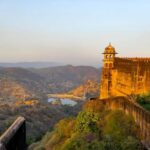
Amber Fort sits on a hilltop near the city. You’ll get a guided visit with time to walk and take photos, and there’s even mention of an aerial/photo opportunity. Once you’re inside, the focus is what you’d expect from a major Rajput fortress: large courtyards, ornate palace spaces, and that famous mirror-work effect that turns sunlight into a kind of sparkle.
A practical note: forts often involve walking and stair steps. Even if you keep the pace easy, give yourself time to slow down for photos and to just look at how the complex is layered.
If you care about architecture, Amber Fort delivers more than one kind of beauty. You’re looking at a blend of styles and a layout designed for status and control—so it’s not just pretty. It’s also a “how did they live here?” lesson in stone.
Panna Meena ka Kund: a short stop with big photo payback
After Amber Fort, you move to Panna Meena ka Kund, a stepwell known for its symmetrical design and geometric patterns. It’s not a long visit—think a quick photo stop plus a guided look—but it’s one of those places where one good angle can turn into a whole set of photos.
The nice part here is variety. Forts can feel heavy and grand. This spot is quieter and more structured. You’ll also pass scenery en route, so the travel isn’t dead time.
If you like architecture that looks almost “planned on purpose,” this is the stop that scratches that itch without demanding a long commitment.
Jal Mahal (Man Sagar Lake): mostly for the viewpoint and the photos
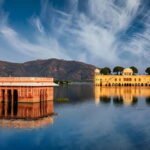
Jal Mahal is the palace that appears to float on water. You’ll likely pass by and get guided time for sightseeing and photos, but the interior isn’t part of the experience.
That’s actually okay. The value of Jal Mahal is the illusion from the shoreline: the submerged lower floors make it look suspended, and the backdrop of the Aravalli hills helps frame it. Even if you don’t go inside, you still get a classic Jaipur image and a chance to breathe for a few minutes before the next historic cluster.
If you’re someone who hates rushed photo stops, plan for a short “stand and watch the light” moment here. You don’t need long—you just need a minute where you stop moving.
City Palace in the middle of it all: Rajput and Mughal blend
City Palace is in the heart of Jaipur, and that’s part of why it’s special. You’re not escaping the city; you’re stepping into a landmark while the city continues around it.
Expect a visit to a magnificent complex that blends Rajput and Mughal architecture. It’s also described as partially home to the royal family, which means it isn’t only a museum shell. You’ll spend around two hours with sightseeing, walking, and guided explanations, plus a photo stop.
Why this stop works: City Palace gives you context. After Amber Fort’s hilltop fortress vibe, City Palace feels like the seat of administration, ceremony, and daily power. It helps you connect the dots between what you saw earlier and what you’ll see next—especially when you move into places tied to knowledge and astronomy.

Jantar Mantar: UNESCO astronomy you can actually picture
Then you hit Jantar Mantar, an 18th-century astronomical observatory and a UNESCO World Heritage site. This is one of those stops where the structures are so large they become the lesson.
You’ll spend about an hour with guided viewing, and the highlight is that there are 19 large-scale instruments used to measure time and track celestial bodies. Even if you don’t study science, you’ll likely feel the logic once you’re standing there. The shapes aren’t decoration. They’re tools made to read the sky.
One more practical point: the tour description includes skip the ticket line, which can help keep your day smooth when crowds are thick.
If you’re traveling with someone who usually tunes out at history sites, Jantar Mantar often earns goodwill because it’s visual, geometric, and strangely satisfying to look at.
Hawa Mahal: 953 windows and a breeze you can feel
Hawa Mahal is the Jaipur icon most people recognize even before they arrive. Here, you’re set up for a photo stop and a visit with walking and sightseeing time.
The standout detail is the building’s 953 intricately designed windows. The idea was ventilation and observation—so when you’re there, you understand it as both architecture and function. It’s a palace facade that looks like it’s built for watching the city move below.
You’ll likely take pictures from different angles and then spend time looking close enough to understand why this facade became a symbol. If you time it right, you may catch cooler air around the area, and the city’s textures feel closer than they would from a viewpoint built for cars.
Albert Hall Museum and Birla Mandir: contrast, calm, and quick walks
After the big forts and big UNESCO sites, the day shifts toward lighter stops that still matter.
At Albert Hall Museum, you’ll get about an hour for visiting, guided sightseeing, and a walking loop. This is a good breather point because it shifts you from outdoors and structures to a more enclosed, slower-paced experience.
Then comes Birla Mandir, visited for about 30 minutes. It’s shorter on purpose, which helps keep your energy up—because later you still want to be fresh for Monkey Temple sunset.
These two stops also add contrast to your day: one grounded in museum time, the other in temple atmosphere. If your day is packed, contrast is your friend.
Monkey Temple (Galta Ji) at sunset: monkeys, steps, and real atmosphere
This is the part that turns a good day into a memorable one.
The Monkey Temple—also known as Galta Ji—sits in a tranquil valley with ancient temple areas and sacred water tanks. You’ll see a large population of monkeys, which changes the feel immediately. It’s not staged. It’s alive.
The big payoff is the sunset light. The tour highlights that you can take in a breathtaking sunset view at the Monkey Temple. That’s when the valley atmosphere really clicks—golden glow, temple edges silhouetted against the sky, and the constant motion of people and animals.
Practical reality check: temple sites can involve steps and uneven walking surfaces. You’ll want comfortable shoes and patience. If you’re sensitive to crowds or animal encounters, keep your pace relaxed and give yourself time to watch before you move into busy areas.
Comfort, timing, and the small stuff that affects your day
Your day is listed as about 8 hours, and that includes pickup/drop-off and travel time between stops. That’s a realistic amount for a full circuit with multiple heritage sites—especially in a city where traffic and street access can change minute to minute.
A few comfort points that matter:
- The tuk-tuk accommodates up to 3 people, but it’s ideally suited for 2 for a more comfortable ride.
- There is mild walking across the day, and some of it is stairs or temple/fort access.
- You’ll be out for a full day, so it’s smart to pace yourself at the big stops. Spend longer where you care most; speed up where you don’t.
Also, you’re in control of the vibe. The private setup means your driver can handle the micro-decisions: where you pause, where you move quicker, and how you get photos without constantly running back and forth.
Value for money: what’s included at this price point
At around $6 per person, the value is largely about what’s covered rather than what’s optional.
Included:
- Pickup and drop from your hotel or preferred Jaipur location
- A private tuk-tuk with an English-speaking driver (and other language options are offered)
- A tour guide if that option is selected
- Bottled water
- Taxes, parking, fuel, and handling charges
Not included:
- Meals
- Monument entrance fees and camera-related fees where applicable
- Alcoholic drinks
- Souvenir photos (available for purchase)
So here’s the honest way to think about it: the tour cost is low because transportation and guidance are bundled tightly, but the monuments and meals still have their own costs. If you plan your day with that in mind—carry water, plan for snacks or meals when you need them—you won’t be surprised later.
One more practical perk: you’re told the tour includes skip the ticket line, which can save time at high-demand sights. That’s worth something when you’re trying to fit a lot into one day.
Who this tuk-tuk day works best for
This is a strong fit if you:
- Want a private Jaipur day with flexibility
- Like street-level city views and quick photo stops
- Want a mix of major landmarks plus one very atmospheric finish at Monkey Temple sunset
- Prefer not to deal with complicated transfers between sites
It’s less ideal if you:
- Need a fully step-free day. The tour includes walking and temple/fort access.
- Have medical limitations or pregnancy concerns, since the tour isn’t described as suitable for pregnant women or people with pre-existing medical conditions.
- Are traveling with large luggage or pets, since those are not allowed.
Should you book this Jaipur tuk-tuk tour?
If you want one day that covers the core “Jaipur identity” landmarks while still feeling personal and flexible, I’d say this is worth booking. The private tuk-tuk approach is the difference-maker—especially for getting the best viewpoints and moving between sites without big-car hassle.
I’d book it if Amber Fort and Jantar Mantar are on your must-do list and you also want a sunset finish at Monkey Temple that feels like a real lived-in place, not a rushed photo stop.
If you hate walking and steps, or you need a more relaxed pace, you might want to choose fewer stops or plan a slower alternative. Otherwise, this tour is a practical way to see a lot of Jaipur without turning the day into a logistical grind.
FAQ
How long is the Jaipur full-day tuk-tuk sightseeing tour?
The tour is listed as 8 hours, including travel time to and from pickup/drop-off locations and time spent at each destination.
Where does pickup happen?
Pickup is included from your hotel or any preferred location in Jaipur, and you’ll also be dropped back at your hotel after the trip.
What’s included in the price?
The tour includes a private tuk-tuk with an English-speaking driver, airport/railway station/hotel pickup and drop, bottled water, taxes, parking, fuel, and handling charges. A tour guide may be included if you select that option.
Are meals and entrance fees included?
Meals are not included. Monument entrance fees (and camera free access, where applicable) are also not included.
Does the tour include skipping ticket lines?
Yes, it’s described as including skip the ticket line.
What should I wear and bring?
Bring a passport or ID card and wear comfortable shoes and comfortable clothes. Mild walking is involved during the day.
Is it allowed to bring pets, luggage, or large bags?
Pets are not allowed, and you should not bring luggage or large bags. The tour is also noted as not suitable for pregnant women or people with pre-existing medical conditions.