REVIEW · NEW DELHI
Full-Day Private Old and New Delhi Combo Tour
Book on GetYourGuide →Operated by A Star Tour. · Bookable on GetYourGuide
Old Delhi hits your senses fast, then New Delhi cleans up the picture. This private combo tour strings together the big sights of Old and New Delhi with a live English/Spanish guide and comfortable door-to-door transport.
What I like most is the mix of street-level culture and monument time: you get a rickshaw ride through Chandni Chowk’s Spice Market zone, plus real UNESCO-grade stops like Humayun’s Tomb (and time at Qutb Minar). One thing to plan for: monument fees and your lunch are not included, so budget a bit extra once you’re on the ground.
In This Review
- Key points before you go
- The Old-to-New Delhi route (and why it works)
- Chandni Chowk and the Spice Market rickshaw ride
- Jama Masjid and Khari Baoli: two very different kinds of awe
- Red Fort views and Humayun’s Tomb: Mughal power in two tempos
- New Delhi’s big geometry: India Gate and Rashtrapati Bhavan pass-bys
- Qutb Minar and Gandhi Smriti: a strong finish with meaning
- Lotus Temple timing: why Monday changes the plan
- Price and logistics: where $30 really lands
- Private guide quality: what you’ll feel during the day
- Who this tour suits best (and who should consider alternatives)
- Should you book the Full-Day Private Old and New Delhi Combo Tour?
- FAQ
- How long is the Full-Day Private Old and New Delhi Combo Tour?
- Where can I get picked up?
- Where will I be dropped off?
- What monuments or stops are included in the itinerary?
- Is the tour private?
- What language is the guide available in?
- Are monument fees included in the price?
- Is lunch included?
- Does the tour skip the ticket line?
- Is the Lotus Temple included, and is it always open?
Key points before you go
- Private, door-to-door pickup from Noida, Gurugram, or New Delhi (plus optional Airport pickup)
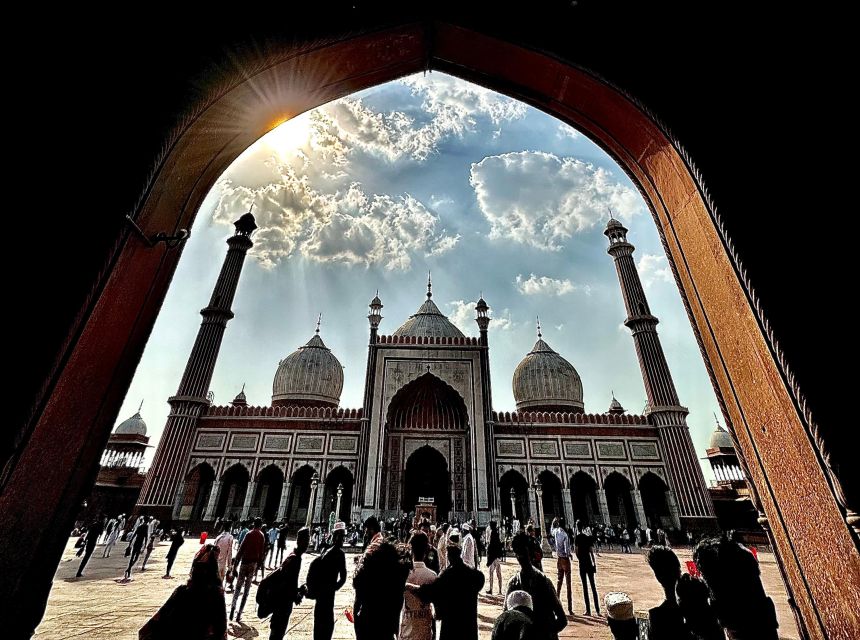
- Guided Old Delhi walking that includes Chandni Chowk, Khari Baoli, and a visit to Jama Masjid
- Mughal-era highlights with Humayun’s Tomb (UNESCO) and views/pass-bys like Red Fort
- New Delhi icons by car so you save energy for real walking stops
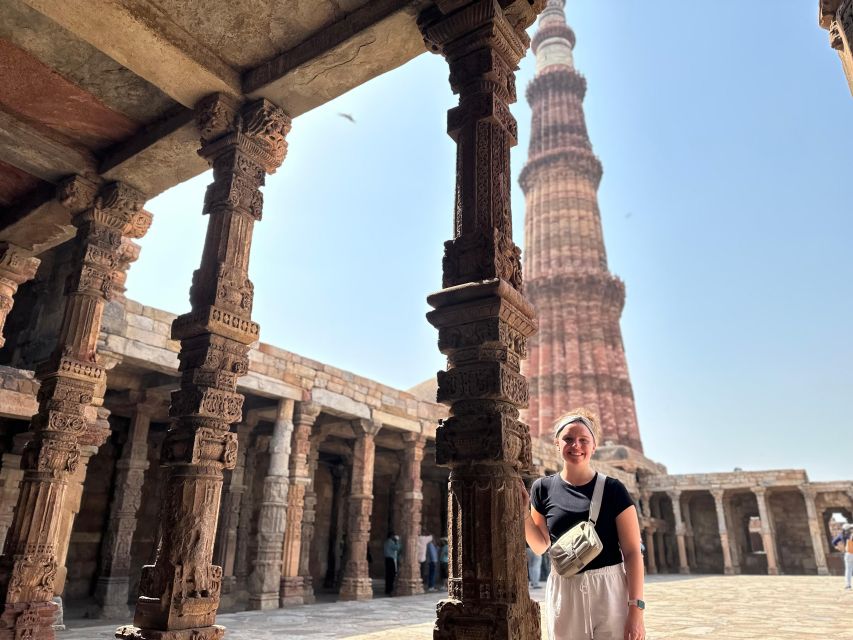
- Qutb Minar visit with a guide at one of India’s most famous minaret sites (UNESCO)
- Good logistics value: AC vehicle, mineral water, parking/tolls handled, and ticket-line skipping
The Old-to-New Delhi route (and why it works)
This is a smart way to see Delhi if you have limited time and want both sides of the city in one day. The schedule is built around an efficient flow: Old Delhi’s markets and mosques first, then New Delhi’s grand government-and-war memorial spaces, finishing with Qutb Minar and museum time.
The duration is listed as 4 to 8 hours, so you’ll feel the flexibility. If traffic is light, the tour can feel punchy. If it’s heavier, the car sections help you keep moving without getting stuck in discomfort. Either way, the private format matters: you’re not waiting on a big group to cross a street, find a meeting point, or decide how long to linger.
Pickup and drop-off are also practical. You can start from Noida, Gurugram, or New Delhi, and you’ll end back in Gurugram, New Delhi, or Noida. That’s a big deal in Delhi, where “nearby” can still mean a long drive.
One more detail: you should bring a passport or ID card, since some entry points require it.
You can also read our reviews of more private tours in New Delhi



Chandni Chowk and the Spice Market rickshaw ride
The tour kicks off around Chandni Chowk, one of Delhi’s oldest and busiest lanes. This place is famous for small ornaments and everyday commerce, and it moves fast. A guide helps you make sense of what you’re seeing instead of just walking through noise.
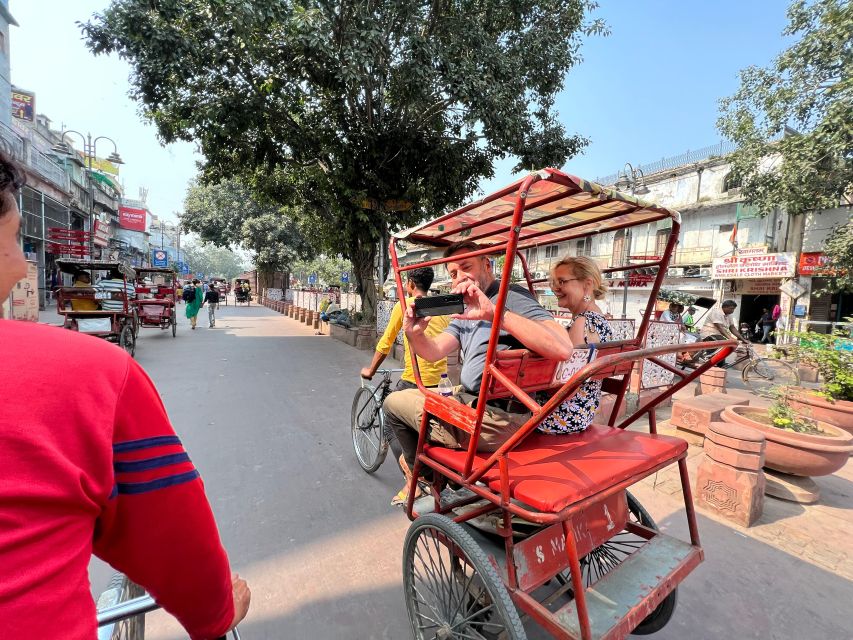
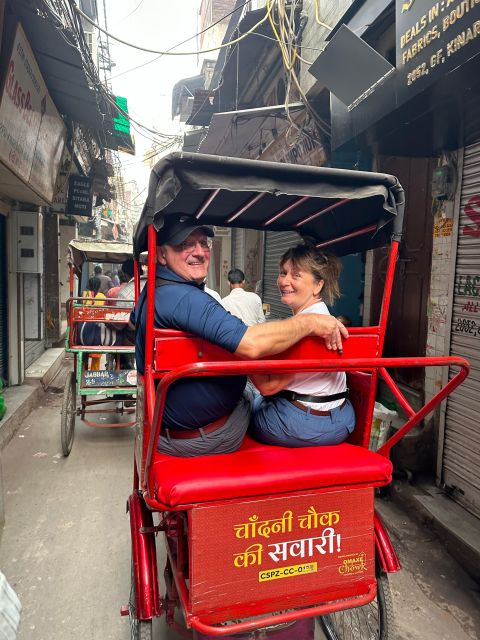
You’ll also get a rickshaw ride experience here. That’s not just entertainment. It’s a smart way to handle crowded streets while still getting the feel of the market. Think of it like a shortcut to the atmosphere: you’re up close, moving slowly enough to notice details, but you’re not walking through every bottleneck on foot.
Chandni Chowk also includes the Spice Market, which draws visitors from all over. The value of a guided start is that you can focus on the fun parts—smells, colors, shop signs, local rhythm—without wasting time trying to figure out where to go next.
If you’re the type who gets overwhelmed in busy bazaars, this is exactly where a private guide helps. You can set your pace, ask questions, and avoid the feeling of being swept along.
Jama Masjid and Khari Baoli: two very different kinds of awe
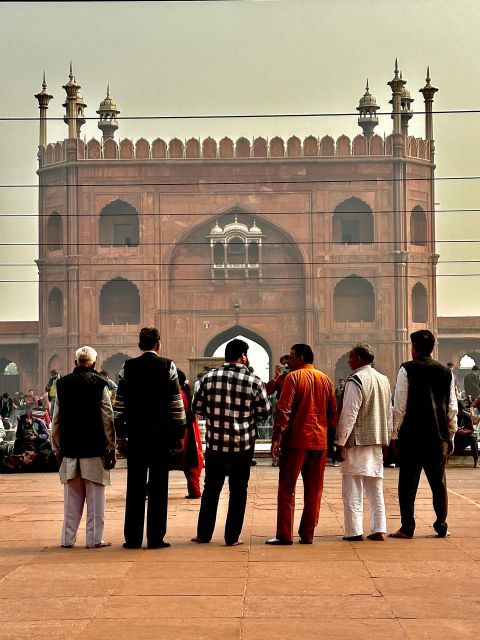
Next comes Jama Masjid, and it’s hard to overstate the scale. The mosque is described as the largest in India, with a courtyard that can hold 25,000 devotees. It began in 1650 under Mughal Emperor Shah Jahan, with more than 5,000 workers taking six years to complete the complex.
The tour includes a guided visit of about 30 minutes here. That time window is useful. Jama Masjid is so large that you can easily lose your bearings if you’re wandering without context. With a guide, you’re more likely to notice what matters—layout, courtyard space, and why this site is so central to Delhi’s identity.
Then the route includes Khari Baoli for a short walk (about 15 minutes). This is a different kind of experience from Jama Masjid: more market energy, more street-level business. It’s a quick slice of everyday Delhi that complements the big monument stop.
Together, these two stops give you contrast: sacred space with Mughal architectural weight, then market life where people still buy, sell, and trade in the present tense.
Red Fort views and Humayun’s Tomb: Mughal power in two tempos

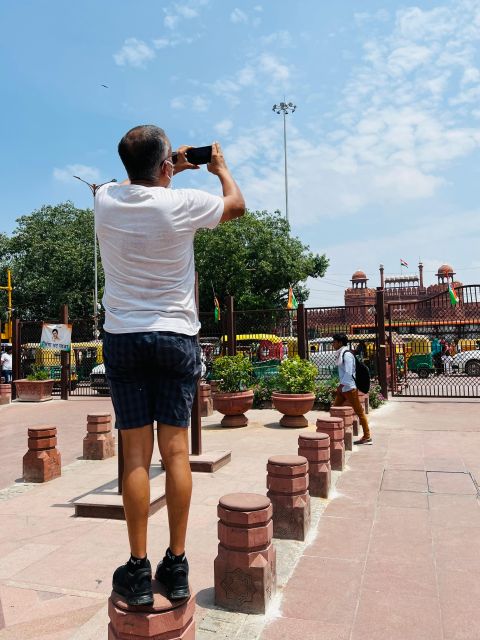
After Jama Masjid and the market segment, you’ll pass by Red Fort. The complex was built in 1648 by Shah Jahan and served as the Mughal residence for about 200 years, until 1857. Even though you don’t spend a full guided visit here, it’s still a worthwhile sighting. Red Fort is adjacent to Salimgarh Fort, and the whole area helps you connect the dots between Delhi’s royal past and its later history.
Then you move to Humayun’s Tomb, which is a highlight stop on this combo tour. This visit is timed at about 1 hour including guided time and walking. The facts alone help explain why people love it: Humayun’s Tomb is a UNESCO World Heritage Site (1993), built in 1569 by order of Humayun’s son Akbar. It was designed by Mirak Mirza Ghiyas, a Persian architect chosen by the widow, Haji begum.
But the real value for you is the experience it gives: this is described as the first garden-tomb on the Indian subcontinent. That means you’re not just looking at buildings. You’re seeing a design idea—tomb plus garden—where symmetry and space shape the mood.
If you’re trying to understand Mughal aesthetics quickly, Humayun’s Tomb is a high-efficiency stop. It gives you a reference point you can carry into the rest of the day.
New Delhi’s big geometry: India Gate and Rashtrapati Bhavan pass-bys
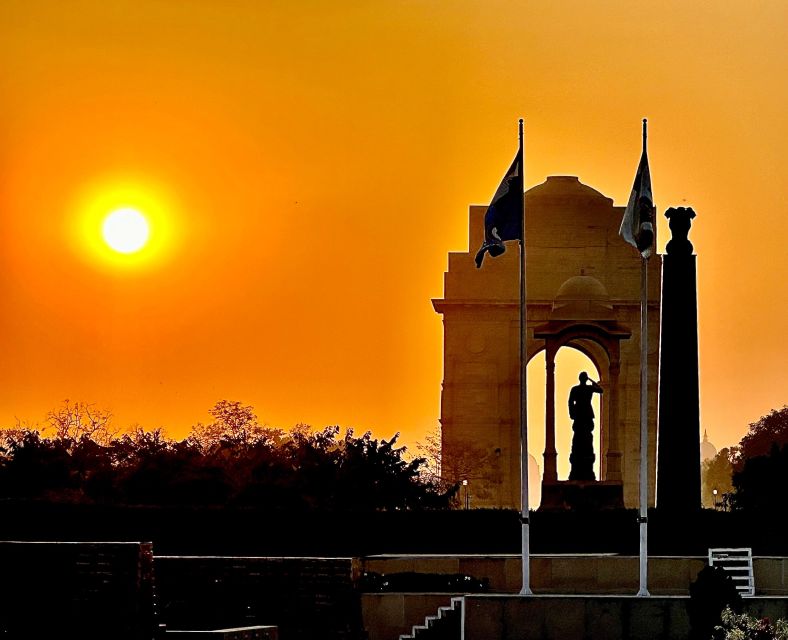
When the tour shifts to New Delhi, it becomes less about crowd navigation and more about taking in the city’s grand layout. You’ll pass by India Gate, a 42-meter-high memorial arch at a crossroad. It was designed by Sir Edwin Lutyens and built to commemorate India soldiers killed in World War I.
There’s also a pass-by of Rashtrapati Bhavan. Even if you’re seeing it from the road, it’s part of the New Delhi “why does everything look planned?” effect. The car sections here are useful. You get photos and orientation without adding extra walking in peak heat.
If you’re thinking about energy management, this part of the itinerary is doing its job. You’ll likely get your best value from spending more time where you’re walking (Chandni Chowk, Jama Masjid, Humayun’s Tomb, Qutb Minar) and using the drive time for quick landmarks.
You can also read our reviews of more tours and experiences in New Delhi





Qutb Minar and Gandhi Smriti: a strong finish with meaning
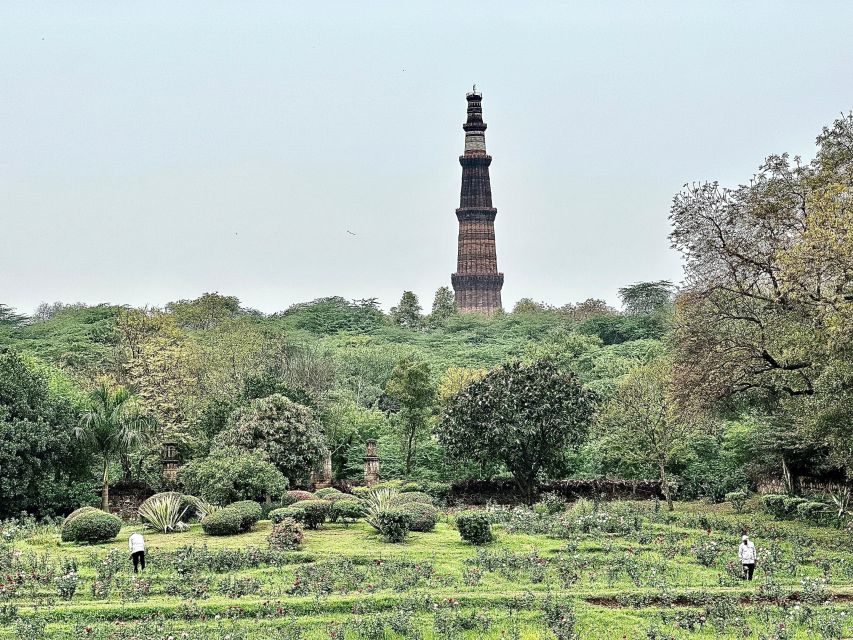
The tour ends with major Delhi monument power, starting with Qutb Minar. This is described as a soaring 73-meter tower, and it’s known as the tallest brick minaret in the world. It was built in 1193 by Qutub-ud-din Aibak after the defeat of Delhi’s last Hindu kingdom, and it’s also a UNESCO World Heritage Site.
You’ll get a guided visit of about 1 hour here. Qutb Minar can feel dramatic even before you go in, but the guide time matters because the site has layers: early Delhi Sultanate history, architecture, and the idea of Delhi as a constant building project across centuries.
After that, the itinerary includes Gandhi Smriti Museum with a 30-minute guided visit. This is a different kind of stop than minarets and mosques: it shifts you from Mughal-era aesthetics and Sultanate-era monuments to modern historical memory.
That mix at the end is smart. It helps your day feel balanced instead of turning into only “old buildings, next old building.”
Lotus Temple timing: why Monday changes the plan
Lotus Temple is mentioned as part of the experience, but there’s a clear warning: it is closed on Monday. The temple is built in the shape of a lotus flower and was constructed in 1986, using pure white marble. The architecture uses the lotus as a symbol common to multiple faiths, and the site has nine pools of water around the “petals,” with spectacular lighting at dusk when flood-lit.
If your day falls on Monday, you may need to expect this part of the route to change. Since the tour schedule can adapt around what’s open, your guide can help you shift time to other stops that day.
Price and logistics: where $30 really lands
At $30 per person, the value comes from how much is bundled into the day. You’re not just paying for a guide. You’re also getting:
- Pickup and drop-off options across Noida, Gurugram, and New Delhi (and Airport pickup if you arrange it)
- Private transportation in an AC vehicle
- Good English speaking guide for a private guided tour (English and Spanish are both supported)
- Packaged mineral water
- Parking, tolls, road tax, driver and fuel, and vehicle expenses, plus applicable taxes
- Skip-the-ticket-line mentioned as part of the experience
What’s not included is important: monument fees and lunch. So I’d treat the $30 as the core tour cost, then add a buffer for entry fees. If you arrive hungry, plan for lunch on your own, since the day doesn’t include a meal.
One more practical note: the route is private, so if you’re traveling with someone you trust—or you just want to move at your own pace—this pricing can be a great deal compared with piecing together separate tickets, transport, and guide time.
Private guide quality: what you’ll feel during the day
The private format isn’t a marketing phrase. It shows up in small moments: you can ask where to stand for the best angle, how long to spend at a viewpoint, and what to prioritize if you’re tired.
The experience also includes live guiding in English and Spanish. That matters in Delhi because signage and local knowledge are huge advantages. A guide helps you interpret what you’re seeing—especially at sites with complex layout like Jama Masjid and the UNESCO complexes.
From the guide names associated with this tour, I’d pay attention to who’s leading you. One booking highlights Asim Ahmed as the guide and Sunil as the driver. In that account, the guide was willing to handle extra requests beyond the planned route and also had a strong eye for photography. That kind of flexibility can turn a good sightseeing day into a better-than-expected one, especially for solo travelers who want to feel secure and guided.
Who this tour suits best (and who should consider alternatives)
This combo tour is ideal if you want a structured, high-coverage day without scrambling for connections. You’ll likely love it if:
- You’re short on time and want both Old and New Delhi in one go
- You prefer a guide for context, not just a checklist of monuments
- You want the comfort of an AC vehicle between walking stops
- You’re traveling solo and value clear pickup and drop-off
It may not be ideal if you want an unstructured day to wander markets freely with no schedule. Since some stops are timed (like 30-minute and 15-minute segments), you’ll get the most satisfaction when you’re comfortable with a plan.
Also, if you’re traveling and monument fees or lunch planning will bother you, you may prefer a tour that bundles those. This one keeps costs lower up front, but you do pay at the gate.
Should you book the Full-Day Private Old and New Delhi Combo Tour?
If you want maximum Delhi impact in a single day, I think this is a strong choice. The pricing feels reasonable because it includes private AC transport, a guide, water, and the work of getting you from stop to stop. The itinerary also hits the city’s emotional arc: chaotic Old Delhi markets, major sacred architecture, Mughal tomb gardens, and New Delhi’s memorial geometry.
I’d book it if your priority is seeing top sites efficiently with a real guide explaining what you’re looking at. I’d skip it or adjust expectations if you dislike paying monument fees separately or you’re hoping for lunch to be handled for you.
If you do book, bring ID, wear comfortable walking shoes, and be ready for Delhi’s energy—because even with the AC car and private setup, the markets are still the markets.
FAQ
How long is the Full-Day Private Old and New Delhi Combo Tour?
The duration is listed as 4 to 8 hours.
Where can I get picked up?
Pickup options include Noida, Gurugram, and New Delhi. Airport pickup is also available if you specify it at booking.
Where will I be dropped off?
Drop-off is listed for Gurugram, New Delhi, or Noida.
What monuments or stops are included in the itinerary?
The itinerary includes Jama Masjid, Khari Baoli, Chandni Chowk, Humayun’s Tomb, Qutb Minar, India Gate (pass by), Rashtrapati Bhavan (pass by), and Gandhi Smriti Museum. Red Fort and other New Delhi icons are pass-by stops.
Is the tour private?
Yes, it’s listed as a private group.
What language is the guide available in?
The tour provides live guiding in English and Spanish.
Are monument fees included in the price?
No. Monument fees are not included.
Is lunch included?
No. Lunch or any other meal is not included.
Does the tour skip the ticket line?
Skip the ticket line is listed as part of the tour.
Is the Lotus Temple included, and is it always open?
Lotus Temple is mentioned, but it is listed as closed on Monday.