REVIEW · JAIPUR
Jaipur Elephant Experience: Bond, Connect, and Learn
Book on GetYourGuide →Operated by Elejungle · Bookable on GetYourGuide
Meet elephants like never before. EleJungle in Amer lets you feed and care for Asian elephants while learning their daily routines and culture, with hands-on activities designed around safety. I love the mix of up-close time (feeding, shower, walk) and the chance to understand how mahouts and families support these animals. One thing to consider: like any small-experience operation, you should double-check your confirmation and timing so you don’t lose hours to a pickup hiccup.
You’ll start with convenient pickup in Amer, meet the team, and get a briefing that frames elephant life beyond the fun photos. After that, the day stays active: feeding bananas, sugarcane, and sorghum grass; a pedicure-style care moment; a hose shower; and a guided walk, followed by lunch around elephants and a drop-off back at Amer. I also like that there’s an English instructor and a private-group format, so you’re not stuck waiting around.
This is a four-hour experience priced at about $40 per person, and most of what you’re paying for is time plus included access: entrance tickets, private transportation, and the listed elephant activities. If you’re sensitive to heat and outdoor conditions, plan for a warm day, bring sunscreen, and wear outdoor clothing.
In This Review
- Key moments that make EleJungle feel like more than a photo stop
- First steps in Amer: pickup, welcome, and the EleJungle briefing
- Feeding session: bananas, sugarcane, and sorghum grass
- Pedicure-style care: watching the foot care moment up close
- Elephant shower with a hose: cool water and playful energy
- Guided walk and safety rules: learning how to move with elephants
- Shelter visit: meeting mahout families and seeing elephant life on its own terms
- Lunch around elephants: staying in the moment
- Value check: is $40 per person worth it?
- Guides and the personal touch: Rohit, Harpreet, Amandeep
- What to bring (and what to skip)
- How to judge the experience for animal welfare in real time
- Tips to get the most out of your 4-hour day
- Should you book the EleJungle Jaipur elephant experience?
- FAQ
- How long is the EleJungle Jaipur elephant experience?
- What is included in the $40 per person price?
- Where do you get picked up and where do you return?
- What elephant activities do I do during the 4 hours?
- What should I bring, and what is not allowed?
- Is the guide/instructor available in English, and can I get a refund if plans change?
Key moments that make EleJungle feel like more than a photo stop
- Feeding with three foods: bananas, sugarcane, and sorghum grass
- Hands-on care moments: pedicure-style foot care and a hose shower
- Culture briefing before you interact: learn elephant life and behavior first
- Shelter visit with mahout families: see how training and daily work connect
- Lunch around the elephants: keep the day relaxed, not rushed to the next attraction
First steps in Amer: pickup, welcome, and the EleJungle briefing
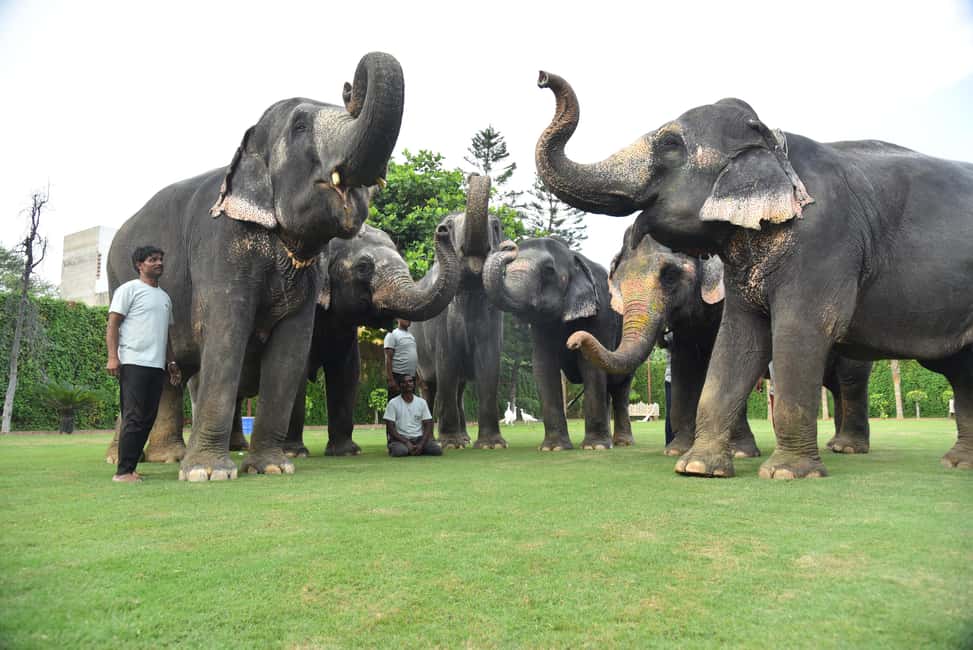
Most Jaipur elephant experiences start with a drive and end with a quick interaction. This one tries to do the opposite by building context before you get close. You’ll be picked up from your chosen location in Amer, then taken to EleJungle for a warm greeting and a briefing about their elephants.
That briefing matters. It sets expectations about what elephants do naturally and what you should do (and not do) during the activities. You’ll also get an overview of their environment and the day’s flow, so when you’re standing near these huge, gentle animals, you’re not just guessing how the interaction works.
Also, you’re not doing this as a crowd. The experience is set up as a private group, with English support. In practice, that means the guide can answer questions and help you move through each part of the day at a human pace—especially during feeding and shower time, when timing and safety matter.
You can also read our reviews of more tours and experiences in Jaipur.



Feeding session: bananas, sugarcane, and sorghum grass
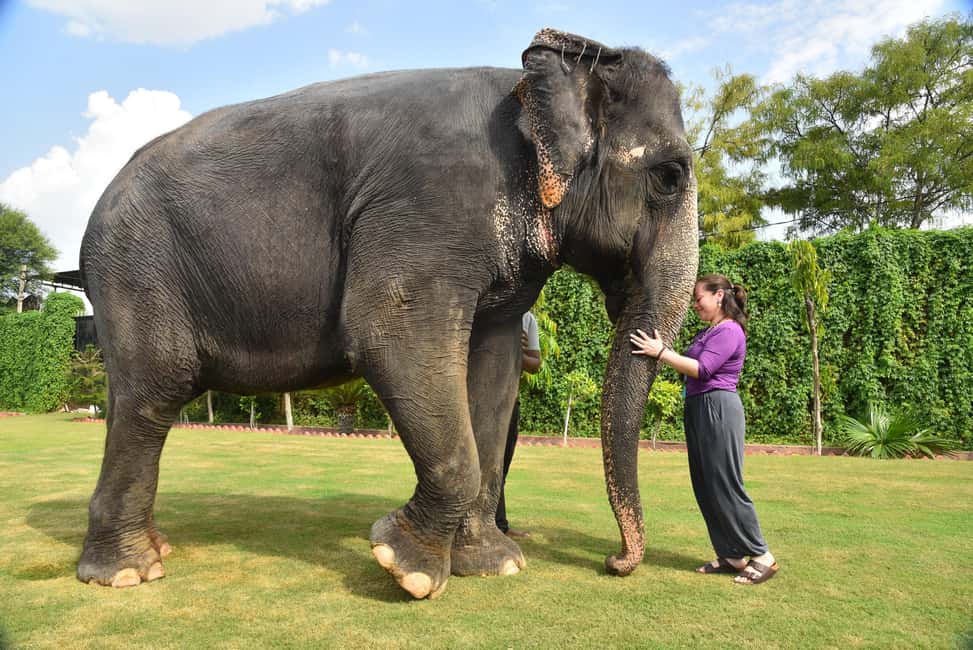
Feeding is the headline activity, and it’s also the moment that can make or break your experience—because it’s where you go from watching to participating. At EleJungle, you feed the elephants with bananas, sugarcane, and sorghum grass.
In Indian culture, elephants are linked with the deity Ganesha, and the act of feeding can be seen as good karma. Whether you treat that as spiritual symbolism or just a cultural note, it changes the tone of the interaction. It’s not only about tossing food; it’s about doing something respectful and intentional.
Here’s how to make it enjoyable:
- Listen to the instructions first. Feeding goes smoothly when you follow cues about where to stand and how to offer food.
- Expect slow, close attention. Elephants use their senses and keep moving; the experience is designed for you to stay safe while they approach.
- Bring your camera, but watch too. Photos are great, yet the best memory often comes from noticing the elephant’s calm focus as it eats.
One more practical note: feeding time also tells you something about the setup. If the staff keep interactions structured and safe, that’s usually a good sign you’ll be guided through the activity rather than left to improvise.
Pedicure-style care: watching the foot care moment up close
Next comes a pedicure-style activity—yes, really. You’ll see elephants receive soothing foot care, which helps keep their feet healthy and strong, and also gives them a chance to relax.
This part of the day is valuable because it shifts your mindset. Instead of thinking only about feeding, you see maintenance and comfort work—care that elephants need long before they ever perform for visitors. Even if you’re not a “pet-care person,” watching how calm the elephants are during the routine helps you understand why regular care matters.
What I like about this activity:
- It’s hands-on care, not a stunt
- It shows the daily health focus behind the experience
- It’s a quieter moment in the day, so you can actually pay attention
If you’re the type who enjoys animal routines (rather than constant action), this is a great stop.
Elephant shower with a hose: cool water and playful energy
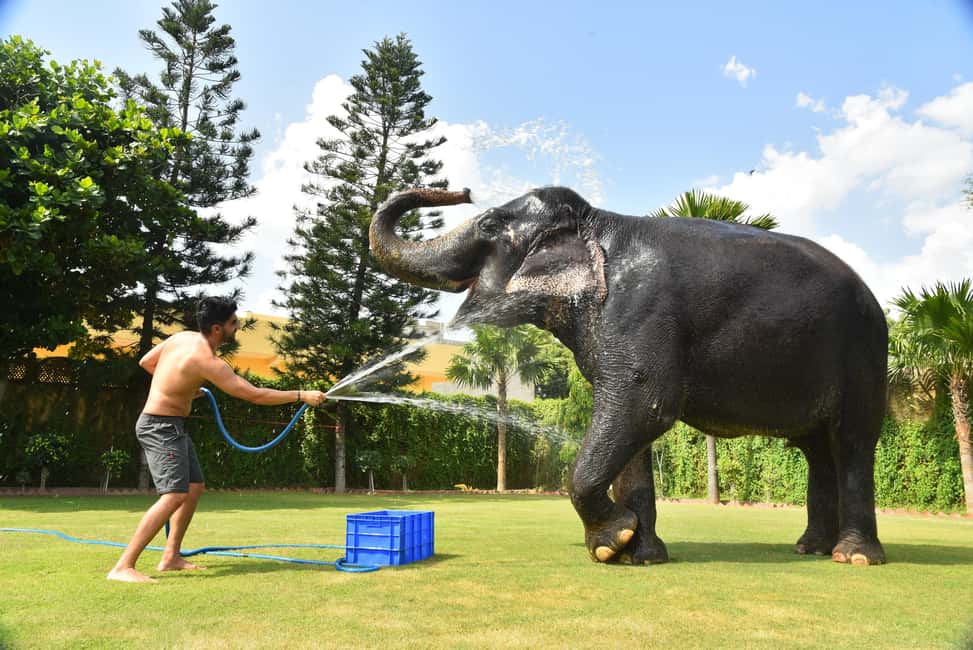
Then you switch from calm care to cool fun: an elephant shower with a hose pipe. On a warm day, the shower can look like a big splash party, but it’s also part of keeping elephants clean and comfortable.
The interactive aspect is what makes this stand out. You’re not just observing water. You’re participating in a controlled way that helps the elephants cool down while letting you bond in a joyful setting.
A couple ways to prepare:
- Wear outdoor clothing you don’t mind getting wet.
- Bring goggles if you want extra eye comfort. They’re listed as a recommended item.
- Expect some playful movement. Elephants can splash and shift their stance, so keep following staff instructions.
I also think the shower is a good reality check. If the team controls spacing and timing well, you get a sense that the fun is happening within boundaries—not through chaos.
Guided walk and safety rules: learning how to move with elephants
After feeding and showering, you’ll join a guided walk. The walk isn’t just a chance to get close; it’s tied to essential safety guidelines, and it helps you see how the elephants move in their environment.
This is where the earlier briefing pays off. The experience is designed so you understand elephant behavior basics before you’re walking near them. You’re not just “passing by”—you’re part of a guided flow that keeps you safe while allowing the elephants to move naturally.
If you’re worried about personal space, don’t be. Your movements are guided, and the elephant’s movement is considered. Still, use common-sense posture: stand where you’re told, avoid sudden gestures, and keep your attention on the guide.
One bonus: a guided walk gives you more time to notice details like how elephants respond to sounds and how they use their trunks to explore. It turns the day from a checklist of activities into a real learning experience.






Shelter visit: meeting mahout families and seeing elephant life on its own terms
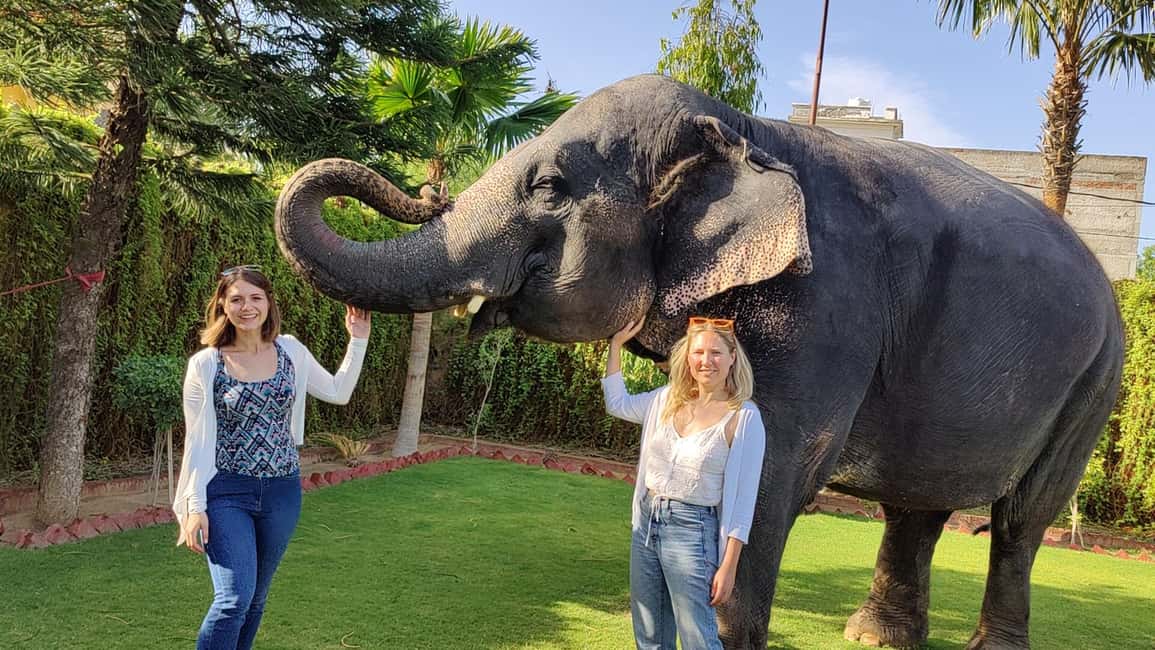
A shelter visit rounds out the experience with something important: you get to see firsthand how the elephants live in a nurturing environment. You’ll also meet the families of the mahouts, the elephant trainers, and learn about their dedication and daily work.
That part is often the most meaningful for me in animal experiences because it connects the dots. Elephants aren’t cared for by one moment of visitor attention. They’re cared for by steady human routines—feeding schedules, health checks, training time, and daily responsibility.
When you meet the mahout families, you also get a more complete picture of why this kind of work exists. It’s not just entertainment; it’s a commitment to caring for the elephants every day.
Lunch around elephants: staying in the moment
After your activities, you’ll wrap up with lunch around elephants. The food is included, and the setting helps you keep the day calm instead of rushing you out the door.
I like this format because it slows things down. Instead of leaving right after the last interaction, you sit, eat, and let your elephant exposure settle into a real memory rather than a fast adrenaline hit.
Practical tip: with a day outdoors in Rajasthan, you’ll likely feel the sun. Choose comfortable clothing, sip water, and eat something you’ll enjoy in that heat.
Value check: is $40 per person worth it?
At $40 per person for about 4 hours, the value depends on what’s included—and here, a lot is bundled. You get:
- private transportation and hotel pickup/drop
- entrance to EleJungle
- a briefing and greeting session
- feeding
- a walk with the elephants
- elephant shower with a hose
- pedicure-style care
- shelter visit
- lunch around elephants
- all mentioned activity fees and taxes
If you compare this to experiences where you pay extra for entry, access, or “photo moments,” the pricing starts to look more fair. You’re paying for time and inclusion across multiple parts of the day, not just one quick interaction.
That said, quality can still vary from operator to operator. Your best move is to go in expecting structure: you’ll feel the difference if the team is organized, if elephants seem comfortable, and if safety guidelines are followed consistently.
Guides and the personal touch: Rohit, Harpreet, Amandeep
A strong day often comes down to the guide. In English, the briefing and question time are part of what makes the interaction make sense—not only what you do with the elephants.
You may be led by guides such as Rohit, who explains the sanctuary and how the elephants live there, or Harpreet, who helps facilitate a customized, personal-feeling experience. Some groups are supported by Amandeep, who helps coordinate activities including elephant ride elements, feeding, painting, and lunch in a smooth flow.
Even if your guide isn’t one of those names, the pattern matters: good guidance helps you enjoy the experience while staying safe and understanding what you’re seeing.
What to bring (and what to skip)
EleJungle gives you the activities, but you’ll want to show up prepared.
Bring:
- sunglasses
- camera
- sunscreen
- outdoor clothing
- goggles
- an ID card (a copy is accepted)
Not allowed:
- smoking in the vehicle
My practical advice: dress for heat and sun. This is Rajasthan, and a 4-hour outdoor experience can feel longer if you’re uncomfortable.
How to judge the experience for animal welfare in real time
You want an experience where the animals look calm, well cared for, and comfortable with routine care. From what people describe, elephants at EleJungle appear well treated, and the staff are kind and helpful.
But you can also judge with your own eyes:
- Look for structured interactions where staff control spacing and timing.
- Notice elephant comfort during pedicure-style foot care and shower time.
- Watch for calm behavior rather than frantic reactions.
- See whether the shelter visit explains care routines and trainer work.
If anything feels chaotic or unsafe, speak up immediately and let the team handle it. A well-run experience welcomes questions and keeps control of the situation.
Tips to get the most out of your 4-hour day
A few simple things can make your memory sharper:
- Use your briefing time. Ask a question about elephant behavior or daily routines before feeding.
- Wear footwear and clothing you can move in. Even if you’re not doing a long hike, walking near elephants changes how you stand and move.
- Plan for photos after you’ve watched. The first minutes near an elephant can be quiet and intense; give yourself time to observe.
- Take your ELEFRIEND memory moment. The experience includes a chance to create a memory with your ELEFRIEND. Don’t rush through it.
Also, consider the day’s pace: you’ll be active with several elephant activities plus lunch, so don’t schedule tight plans right before or right after.
Should you book the EleJungle Jaipur elephant experience?
If you want a Jaipur elephant day that feels structured, humane, and genuinely educational, I think EleJungle is worth serious consideration. The combination of feeding, pedicure-style care, hose showers, and a shelter visit gives you more than a one-note interaction. Add lunch around the elephants and a private group feel, and the day becomes easier to enjoy without crowds or constant waiting.
Book it if:
- you want up-close elephant interaction with safety rules clearly part of the plan
- you like learning through short briefings tied to activities
- you appreciate seeing mahout families and shelter life, not only performances
I’d be cautious if:
- you’re very risk-sensitive about timing and want to avoid any chance of pickup confusion, so confirm details carefully
- you dislike outdoor heat and long sun exposure, since this is a day that stays outside
If you handle the basics—sunscreen, confirmation, comfortable clothing—you’ll likely end the day with the kind of memory that lasts longer than a photo.
FAQ
How long is the EleJungle Jaipur elephant experience?
The experience lasts 4 hours.
What is included in the $40 per person price?
It includes hotel pickup and drop (Amer), private transportation, entrance tickets to EleJungle, a briefing and greeting, feeding the elephants, walking with the elephants, elephant shower with a hose, pedicure care, a shelter visit, and lunch around elephants. All taxes, fees, and handling charges are included.
Where do you get picked up and where do you return?
Pickup is from Amer, and you return to Amer after the 4-hour visit.
What elephant activities do I do during the 4 hours?
You will meet the elephants, do feeding with bananas, sugarcane, and sorghum grass, participate in a pedicure-style care activity, join the elephant shower with a hose, take a guided walk, and visit the elephant shelter.
What should I bring, and what is not allowed?
Bring sunglasses, camera, sunscreen, outdoor clothing, goggles, and an ID card (a copy is accepted). Smoking is not allowed in the vehicle.
Is the guide/instructor available in English, and can I get a refund if plans change?
Yes, the instructor is English. You can cancel up to 24 hours in advance for a full refund, and you can reserve now and pay later.