REVIEW · KOCHI
Kochi: Kathakali Evening Show with Transfers
Book on GetYourGuide →Operated by Trip Buggy · Bookable on GetYourGuide
Painted faces turn into legends. This Kochi Kathakali evening pairs a makeup session with a live dance-drama, where stories move through eyes, hands, and body language powered by Kerala percussion. You’ll also hear English guidance that helps the mythic action land, even if you’ve never seen the art form before.
I particularly like the pre-show makeup demonstration—you get to watch artists build the face using natural pigments and rice paste, then see how color codes signal roles like good, evil, power, and spirituality. I also like the round-trip hotel transfers and small group size (limited to 8), because you can focus on the show instead of logistics.
One consideration: the experience includes narration from the guide during the evening, and if you dislike long verbal explanations, you may find the pace a bit talk-heavy. Also, it’s worth paying attention to the order of events, since some parts of the makeup segment may feel less structured than you expect.
In This Review
- Key things I’d focus on before you go
- From Makeup to Myth: Why Kathakali Looks Like Magic
- Getting There the Easy Way: Napier Heritage Fort Kochi and Hotel Pickup
- The Makeup Session: Where Natural Pigments Become Character
- The Performance: Live Chenda and Maddalam, Story Told by Movement
- Stories You Can Feel: Mahabharata and Ramayana Themes
- What the English Guide Adds (and When It Might Feel Too Much)
- Photos, Videos, and Simple Etiquette That Helps
- Transfers, Small Group Size, and the Pace of the Evening
- Price and Value: Why $11 Can Make Sense Here
- Who This Experience Suits Best (and Who Might Want Something Else)
- Should You Book This Kochi Kathakali Evening?
- FAQ
- Where does the activity start?
- Is hotel pickup included?
- How long is the experience?
- What’s included in the price?
- What’s not included?
- Is there an English guide?
- Are flash photos allowed?
Key things I’d focus on before you go
- Pre-show makeup transformation with natural pigments, rice paste, and dramatic eye lining
- Color-coded character meanings that turn facial design into storytelling
- Live musicians and percussion like chenda and maddalam inside an intimate hall
- Hand gestures and expressions (mudras and navarasas) that carry the plot without needing spoken dialogue
- English narration throughout to connect you to the Mahabharata and Ramayana themes
- No flash photography, so plan on phone photos without the flash
From Makeup to Myth: Why Kathakali Looks Like Magic
Kathakali is a dance-drama from Kerala where nothing is just decoration. The costumes, the face paint, the intense eye movement, and the codified hand gestures all work together to tell a story you can follow—even when the performers are using classical Malayalam or Sanskrit.
The big hook of this evening is that you don’t just show up for the performance and leave. You start by watching the artists transform first. In many other cultural shows, the performers appear fully made up and you’re left wondering how they get there. Here, the makeup process is part of the show itself, and it’s where the symbolism becomes real.
And because the performance is built around mudras (hand gestures) and navarasas (the facial/emotional expressions), you don’t need language skills to understand what’s happening. You’re watching emotions take shape.
You can also read our reviews of more evening experiences in Kochi

Getting There the Easy Way: Napier Heritage Fort Kochi and Hotel Pickup
You’re based in Kochi for this outing, and the experience is set up to remove the usual evening headaches. Pickup is available from your hotel in Kochi or Ernakulam (depending on the option you choose), and then you head to the venue near Napier Heritage Fort Kochi.
Once you arrive, you don’t waste time hunting for seats. You enter an intimate setting in a heritage performance hall, and the evening runs as a single, guided loop: pickup, arrival, makeup segment, show, and then you’re transported back to your hotel.
Why this matters for your trip: Kochi evenings can get busy, and traffic can be unpredictable. With transfers included, you’re less likely to miss the start of the most visually fascinating part—those first makeup strokes that set the character for the entire performance.
The Makeup Session: Where Natural Pigments Become Character
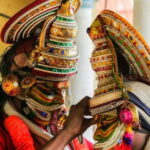
This is one of the most memorable parts of the whole experience, because it explains the “how” behind Kathakali’s look. Before the performance, you watch a pre-show makeup demonstration where artists use natural pigments and rice paste to build elaborate facial expressions and dramatic characters.
The artists also use vivid colors in a deliberate way. Instead of random beauty, each color choice signals meaning—good versus evil, power, spirituality, and other character traits. When you understand that, the performance becomes easier to read. You start noticing that the face paint isn’t just there to look bold; it’s doing narrative work from the first moment the performer steps on stage.
You’ll also see attention to the eyes. Kathakali relies heavily on eye movement and expression, and the eyes are lined with dyes that heighten the drama. It’s the kind of detail that’s almost impossible to appreciate from far away, which is why seeing the process up close before the show can feel like an unfair advantage.
Practical tip: flash photography is not allowed. If you want photos, keep your flash off, and follow whatever instructions the staff gives once you’re seated.
The Performance: Live Chenda and Maddalam, Story Told by Movement
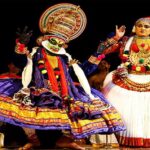
After the lamps are lit and the percussion takes over, the performance begins. Kathakali is a dance-drama, not a “dance show” in the modern sense. You’ll see storytelling through mime, movement, and rhythm—backed by live music and traditional instruments, including chenda and maddalam.
The atmosphere is part of the impact. The show happens in an intimate heritage hall, so the sound lands in a way that doesn’t feel distant. You’re close enough to notice the intensity in the performers’ posture and the precision of their gestures.
As the story unfolds, you’ll recognize how Kathakali communicates. Even though the performers may speak or sing in classical Malayalam or Sanskrit, the plot isn’t dependent on spoken words. It’s delivered through:
- mudras (hand gestures)
- facial expression (navarasas)
- body movement and staging
That’s why Kathakali can feel like a visual language. If you’re the type who likes art that “reads” even when you don’t know every detail, this style suits you.
Stories You Can Feel: Mahabharata and Ramayana Themes
This evening pulls from epic traditions like the Mahabharata and Ramayana, which means you’re usually watching larger-than-life struggles: battles, divine interventions, and moral dilemmas.
What I like about these stories in performance form is that the emotional arc is clear. You may not catch every spoken line, but you can still follow shifts in energy—rage becomes devotion, threat becomes dignity, and conflict resolves into moral clarity.
A guide helps connect the dots with English commentary. That matters because it turns the performance from purely visual spectacle into something that feels grounded in cultural meaning. You’re not guessing what everything represents; you’re learning the story’s themes while you watch them take physical form.
And if you enjoy myth and symbolism, this is the kind of show where those interests get rewarded fast.



What the English Guide Adds (and When It Might Feel Too Much)
This is a live English tour guide experience, and the guide provides narration during the evening. That added context can make a big difference, especially for first-timers. You’ll get help understanding what’s happening and why certain character traits, gestures, and expressions matter.
That said, one caution comes up: if the narration runs long for you, it can start to feel like the show slows down around certain moments. The strongest approach is to treat the guide as part of the performance, not a separate lecture. If you’re someone who wants minimal talking and maximum action, you’ll want to manage expectations.
You can also prepare your mood. Go in thinking of it as a guided cultural evening, not a silent stage show.
Photos, Videos, and Simple Etiquette That Helps
Photography rules are clear: flash photography is not allowed. That one detail changes your setup. If you want good images, rely on normal lighting and stabilize your phone instead of using flash.
One nice bonus: photos and videos are encouraged, and there can be moments where performers are comfortable with close-up pictures. That doesn’t mean you should rush in or interrupt—just be ready to ask politely if the staff allows it.
There may also be a chance to interact at the end of the evening, like posing with a dancer. Even if that doesn’t happen for every person, it gives you something fun to look forward to when the performance wraps.
Transfers, Small Group Size, and the Pace of the Evening
This experience is built for a relaxed night out. It’s a small group with a maximum of 8 participants, and that’s not just a comfort perk. Smaller groups typically mean fewer delays at pickup points and a calmer flow getting seated and guided through the makeup segment.
You’ll also skip the ticket line, which can matter for evening events when queues form quickly. Less waiting gives you more time to watch the makeup and settle into the hall before the first drumbeat.
The duration is listed as 1 day, with the show itself described as a traditional performance of about 2 hours. That’s a reasonable time block for jet-lag days, dinner planning, or fitting Kochi culture into a tight itinerary.
And because food and drinks are not included, you’ll want to plan around meals before or after. If you’re the type who gets hungry easily during guided evenings, eat earlier so the show stays enjoyable.
Price and Value: Why $11 Can Make Sense Here
At about $11 per person, the value is strong—if you care about more than just watching a stage performance. This price includes the big overhead costs you’d otherwise pay for on your own: round-trip transfers from your hotel area, the pre-show makeup demonstration, and a Kathakali performance with English guidance.
For a budget amount, you’re getting:
- access to the makeup transformation (often the most informative part)
- live performers and live musicians (not a filmed show)
- guided storytelling support in English
- transportation to keep the evening smooth
The main trade-off is that food isn’t included. You’ll pay for meals separately, so your total “evening cost” will be a bit more than the ticket price. Still, for the cultural payoff you’re getting, the all-in experience can feel like a smart use of money rather than a quick ticket-and-vanish evening.
If you’re trying to pick one cultural show in Kochi that teaches you something visual and symbolic, this is the kind of option that can be worth the effort.
Who This Experience Suits Best (and Who Might Want Something Else)
You’ll likely enjoy this most if:
- you want Kerala culture in a concentrated evening format
- you love visual storytelling, costumes, and symbolism
- you’re curious about how performance art transforms with makeup and music
- you’d appreciate English context even if you’re seeing a dance form from a different language tradition
It may not be your best match if:
- you dislike narration or long verbal setup
- you want only action with no explanation
- you’re easily distracted by process details (the makeup is a real part of the show)
Also think about your photography preferences. If you’re hoping for flash photography, you won’t be able to do that. If you’re fine with no-flash phone photos, you’ll probably be happier.
Should You Book This Kochi Kathakali Evening?
I’d book this if you want a complete Kathakali experience, not just a performance. The standout value is the pre-show makeup plus the live, English-guided narrative, all with round-trip transfers that keep your evening stress-free.
Skip it or look for another option if you know you’re sensitive to talk-heavy pacing or you really want a tightly timed show with minimal guide narration. In that case, you might prefer a performance-only ticket.
If you’re visiting Kochi for the first time, this is one of the more meaningful ways to spend an evening. You’ll leave with a clearer sense of how Kathakali works—how color codes, gestures, and percussion combine to turn epic stories into movement you can actually read.
FAQ
Where does the activity start?
It starts at Napier Heritage Fort Kochi.
Is hotel pickup included?
Yes. Round-trip transfers are included from hotels in Kochi or Ernakulam, if you select that option.
How long is the experience?
The experience is listed as valid for 1 day, and the Kathakali performance is described as lasting about 2 hours.
What’s included in the price?
Round-trip hotel transfers (from Kochi or Ernakulam), a pre-show makeup demonstration, and the Kathakali dance performance.
What’s not included?
Food and drinks, plus personal expenses.
Is there an English guide?
Yes. The tour includes a live English tour guide and English narration/commentary during the experience.
Are flash photos allowed?
No. Flash photography is not allowed.