REVIEW · JAIPUR
From Jaipur: Private Amber Fort, Jal Mahal and More Car Tour
Book on GetYourGuide →Operated by India Tour Solution - ITS · Bookable on GetYourGuide
Jaipur can feel like one giant photo shoot. This private car tour turns that into a story you can actually follow, with stops that explain how the city worked and why it was built this way. I especially like the chauffeured air-conditioned ride between monuments, and the practical touch of skip-the-line entry when you’re ready to move.
I also love what the guide brings to the day: clearer context, not just names on a wall. In particular, the explanations from guides like JK and Hitish (and smooth driving from people such as Prakash and Amit) show up again and again as the reason the tour feels fun instead of rushed.
One possible drawback: the schedule packs in major sights and some walking, so it’s not ideal if you want slow, open-ended roaming for the full day. At Amber Fort and City Palace you’ll spend real time inside, and at Jal Mahal there’s a 30-minute walk.
In This Review
- Key highlights you’ll feel immediately
- How the private car makes Jaipur easier (and better)
- Hawa Mahal and the lattice that makes it work
- The step well: architecture you feel in your body
- Amber Fort: red sandstone, marble, and time well spent
- Jal Mahal: the submerged palace look that shocks you
- Lunch in Jaipur: a timed break that keeps momentum
- Shopping time for gems, bangles, and silver
- City Palace and Chandra Mahal: royal residence with museum meaning
- Jantar Mantar: when astronomy becomes architecture
- Hawa Mahal again: a second look that seals the memory
- Price and value: why $32 can work here
- Who should book this tour (and who should reconsider)
- Should you book it?
- FAQ
- FAQ
- How long is the tour from start to finish?
- What pickup and drop-off options are available?
- Is this a private tour?
- Which monuments and sites are included during the day?
- Does the price include lunch and entrance fees?
- What languages are the live guides available in?
Key highlights you’ll feel immediately
- Private, air-conditioned vehicle with pickup and drop-off across Jaipur (or the airport)
- Skip-the-line entry via a separate entrance at the key sites
- Architecture and astronomy stops that make Jantar Mantar more than a photo backdrop
- Amber Fort + Jal Mahal pairing for big contrasts: fortress glory and a palace floating on water
- Lunch break plus shopping time for gems, bangles, and silver jewelry without blowing the day
How the private car makes Jaipur easier (and better)
Jaipur’s sights are spread out, and that matters. When you’re doing major monuments back-to-back, the car isn’t a luxury. It’s how you keep the day comfortable and on track, especially in heat or when traffic changes your pace.
This tour includes a private, air-conditioned vehicle with your own driver. The car size depends on group size: a 4-seater sedan for 1 to 2 people, a 6-seater SUV for 3 to 4, and a 10-seater van for 5 to 10. That usually means you’re not squeezed, and you can hear your guide without yelling over the ride.
You’ll also have water bottles during the trip, which sounds basic until you’re walking between sun and shade. It’s the kind of small detail that helps you enjoy the sights instead of counting minutes until the next stop.
And because this is a private group, the tour pace can match you. If you want quick pictures at a viewpoint, you can do that. If something grabs your attention, your guide can spend a little more time explaining what you’re actually looking at.
You can also read our reviews of more private tours in Jaipur



Hawa Mahal and the lattice that makes it work
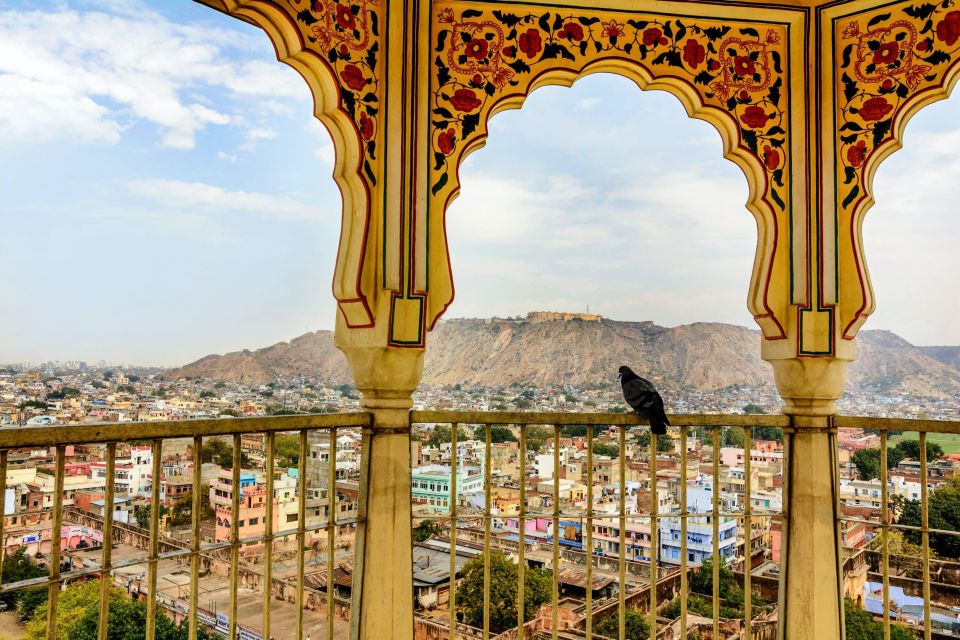
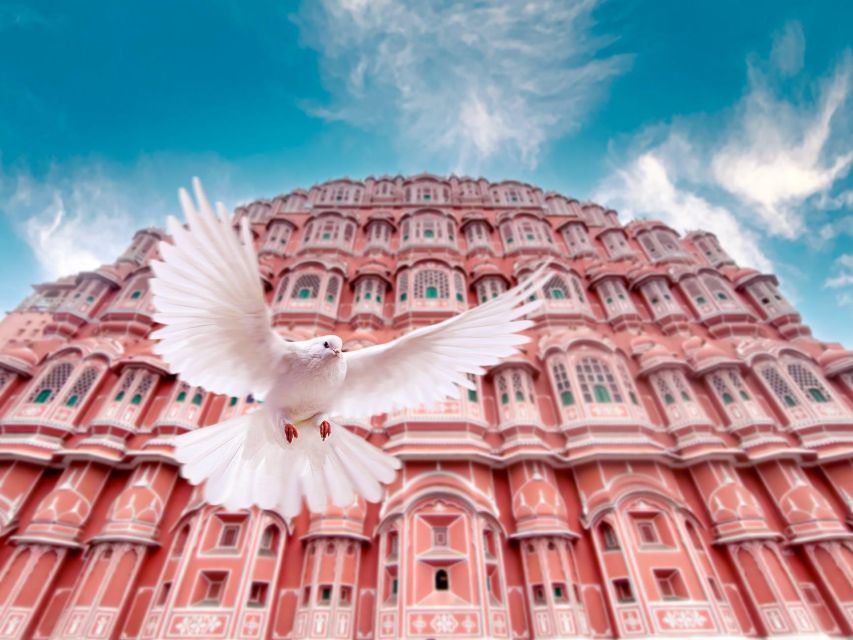
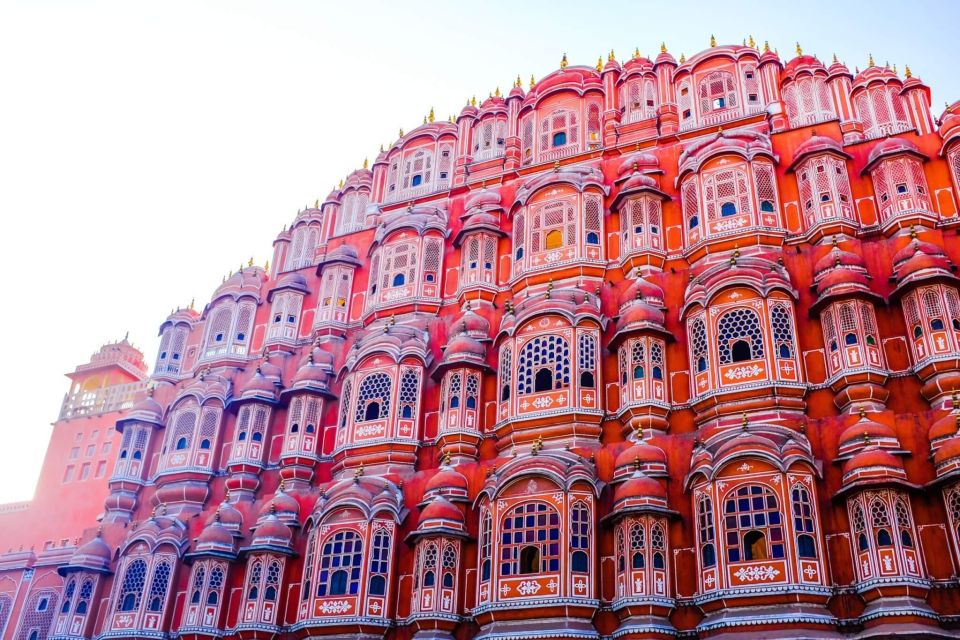
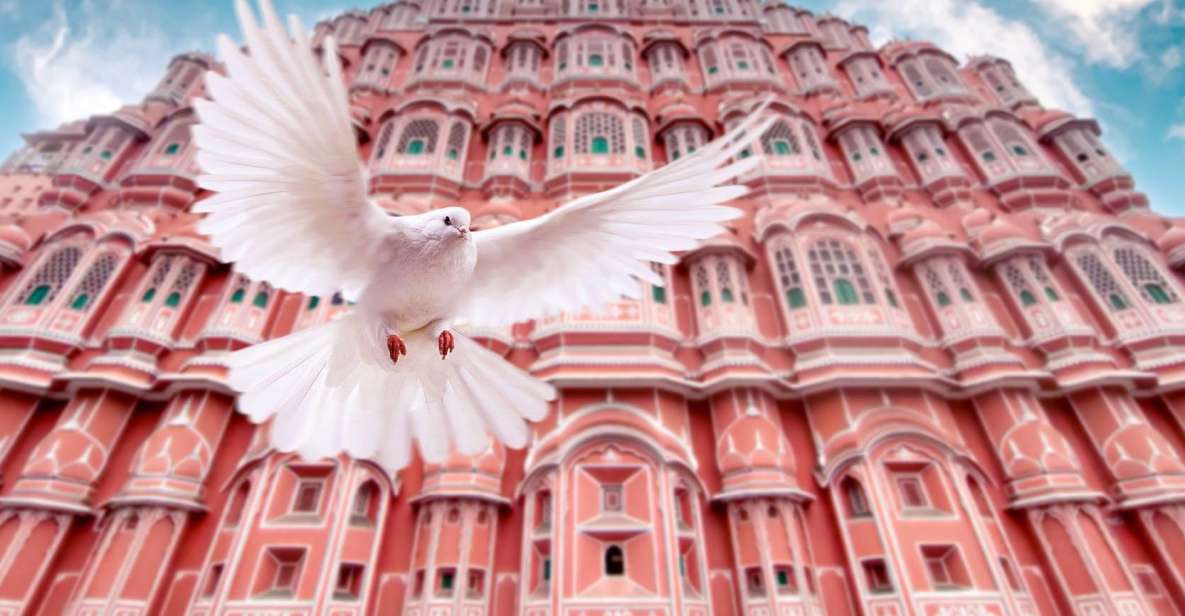
Hawa Mahal is one of those places you feel before you fully understand it. The first look is instantly memorable: the facade is covered in intricate latticework, like the building is wearing a patterned mask.
What makes it interesting is the function behind the look. Your guide will connect the design to how people used windows for privacy and for viewing life outside without being fully exposed. That’s why the experience improves with a guide: you stop treating Hawa Mahal as just a pretty wall and start seeing it as a piece of social design.
Even if you’ve seen pictures before, seeing it in person feels different. The color tones shift across the day, and the patterning becomes more detailed as you get closer. Budget 30 minutes for this stop, which is enough time to get oriented, take photos from the right angles, and still move on with energy.
A small practical note: Jaipur mornings and afternoons can vary in brightness. If you care about photos, ask your guide when the best light is likely to hit the facade, since timing can change your results.
The step well: architecture you feel in your body
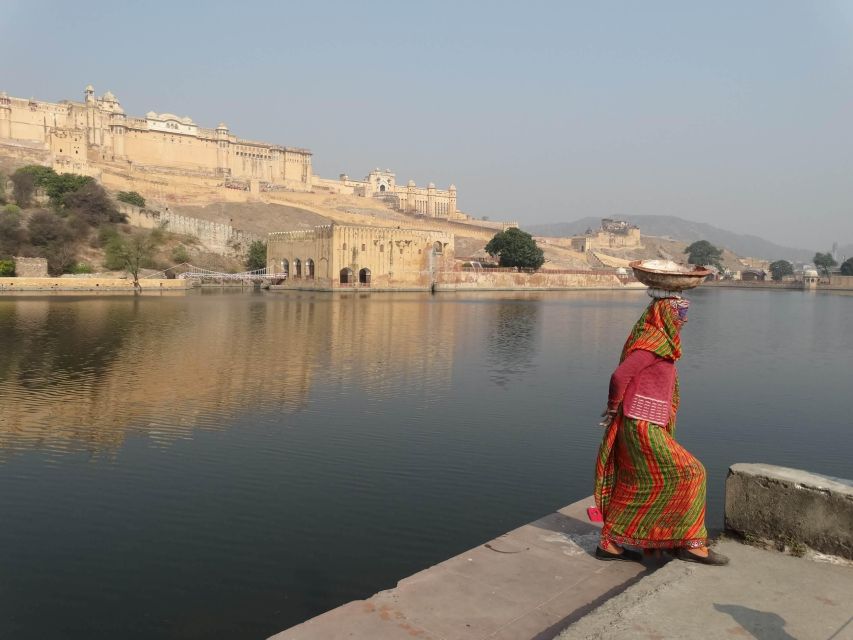
Then the day shifts from palace surfaces to something calmer: an ancient step well. A step well is one of those structures that makes you wonder how people lived with weather and water before modern plumbing.
You’ll spend about 30 minutes here, and the experience tends to feel quieter than the major palaces. The steps lead down in a way that creates geometry you can track visually even when you don’t know the technical terms. That’s the key. A guide can point out why the layout is more than decoration—how it supports cooling, access, and water collection.
This stop is also a useful break in a day packed with landmarks. If you’re starting to feel monument fatigue, a step well is a reset button. It invites slower looking and gives your legs a different kind of movement than stair-heavy forts.
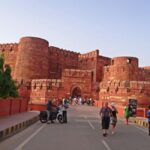
Amber Fort: red sandstone, marble, and time well spent
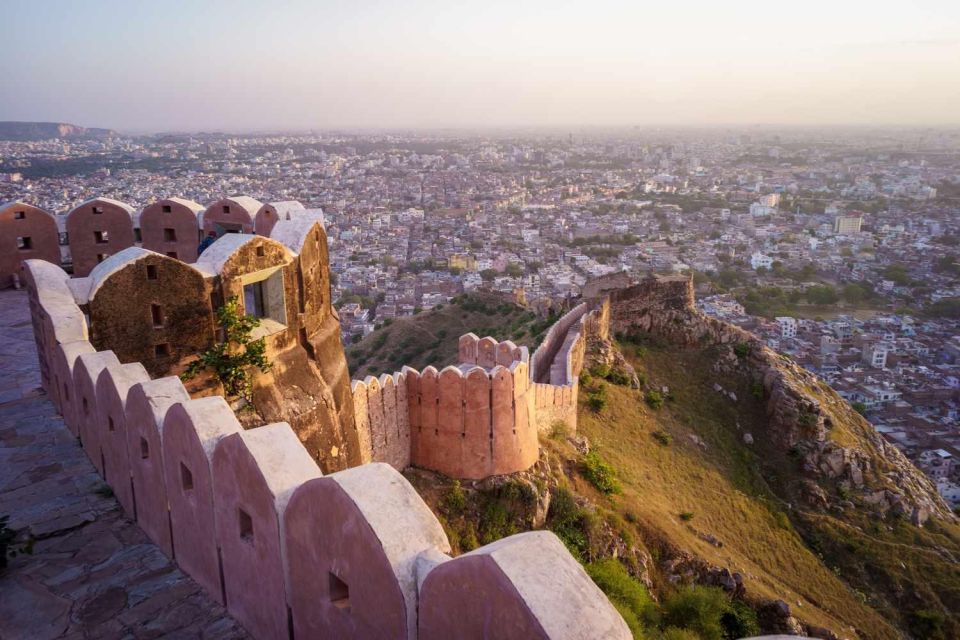
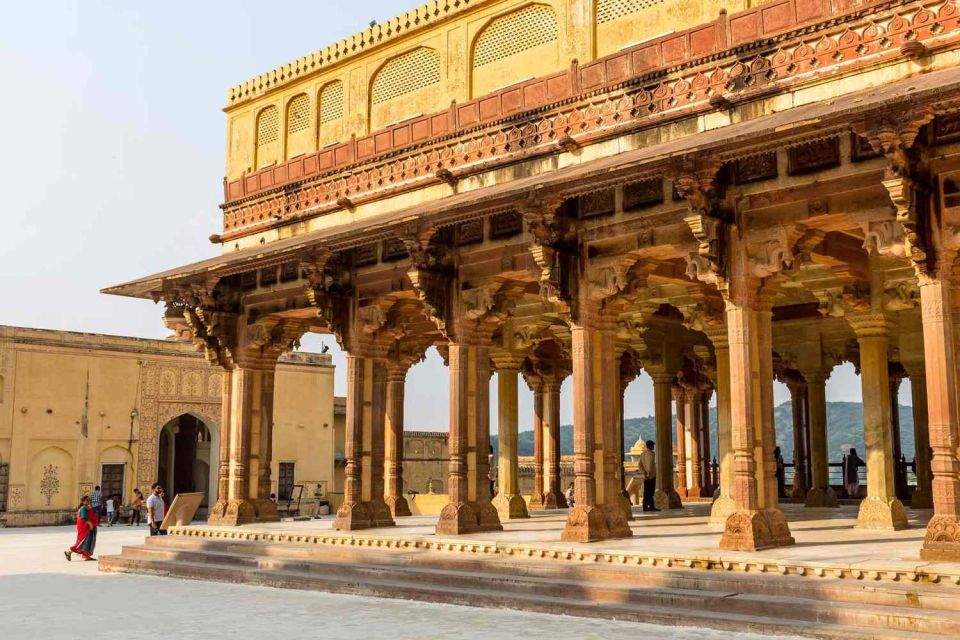
Amber Fort is the headline for a reason. It’s visually dramatic, but the bigger payoff is how your guide ties materials and layout to power, daily life, and the way the fort controlled movement.
You’ll have around 1.5 hours at Amber Fort with guided touring and sightseeing. That’s a solid amount of time. Long enough to understand what you’re seeing, and not so long that the day drags or turns into a photo sprint.
The fort is known for red sandstone and marble details, and the textures are impressive up close. This is also where you’ll notice how the fort’s design creates different “moods” as you move: open courtyards feel one way, enclosed halls feel another, and viewpoints give you instant context for the whole complex.
If you’re sensitive to walking or you’re carrying a bag, plan for it here. The fort is not just a single building you admire from one spot. You’ll move through areas where the pace can pick up naturally.
For me, the best part is that you’re not just scanning for Instagram angles. With the right guide, you learn what the spaces were meant to do and what that suggests about life when the fort was active.
Jal Mahal: the submerged palace look that shocks you
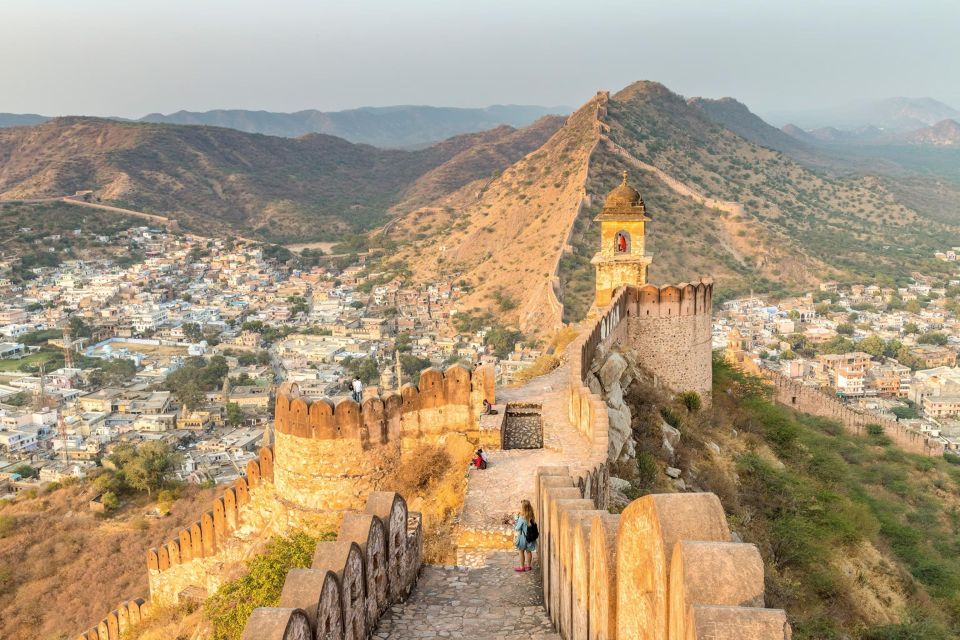
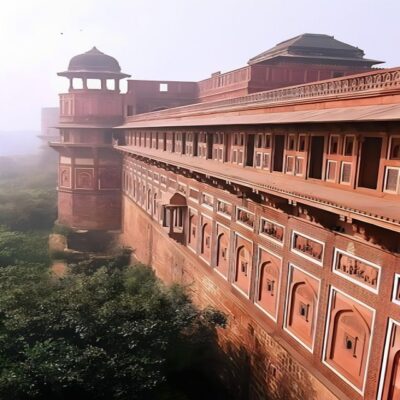
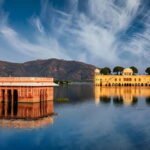
After Amber Fort’s fort energy, Jal Mahal changes the vibe fast. It’s a palace submerged in the water, and the effect is genuinely striking: it looks like the structure belongs to the lake more than to the shore.
You’ll spend about 30 minutes here, including a visit, guided sightseeing, and a walk. That walk is short enough to stay pleasant, but it’s long enough to feel the place rather than just view it from one point.
What I love about this stop is the contrast. Amber Fort says authority and defense. Jal Mahal says leisure, spectacle, and control of an environment you can’t physically build from scratch. Seeing both in one day gives you a more complete picture of how Rajasthan’s rulers used architecture for different moods and needs.
If you’re thinking about photos, keep your eyes on water reflections and the way the palace shape stays fixed even as the lighting changes. Your guide can help you position yourself for the best views while keeping the timing sensible for the rest of the day.



Lunch in Jaipur: a timed break that keeps momentum
You get about an hour for lunch at a handpicked restaurant. That matters because a timed lunch keeps the day from turning into “we’ll eat whenever we find something.” With a private guide and car, you avoid the common Jaipur problem of spending more time searching than eating.
The tour is flexible in the sense that your guide helps steer you toward local flavors, not just the most obvious tourist menus. If you’re curious about what people actually eat in the area, ask your guide what to try. That’s where you usually get the best recommendations—simple, practical choices that match the local cuisine style.
This lunch block also helps you recharge for City Palace and Jantar Mantar later. Jaipur days can stack up quickly. A real sit-down meal prevents the afternoon from becoming a blur.
Shopping time for gems, bangles, and silver
There’s also time for leisure shopping, and the tour doesn’t treat it like an obligation. You’ll have a window to browse goods Jaipur is known for, including gems, bangles, and silver jewelry.
I like shopping time built into a structured tour because you can control your pace. You can look without pressure, compare what you find, and decide whether you really want to buy today or save it for another trip.
Practical tip: if jewelry is on your radar, keep an eye on quality and craftsmanship rather than just the shine. If your guide points out materials or how pieces are made, listen. It makes your choices feel more confident.
Even if you skip buying, this stop is useful. Jaipur shopping teaches you what the city values in its craft culture, and you’ll start noticing those details again when you pass stalls outside the tour.
City Palace and Chandra Mahal: royal residence with museum meaning
City Palace is where Jaipur’s royal story becomes physical again. You’ll explore with a guided tour and sightseeing, with about 1.5 hours here.
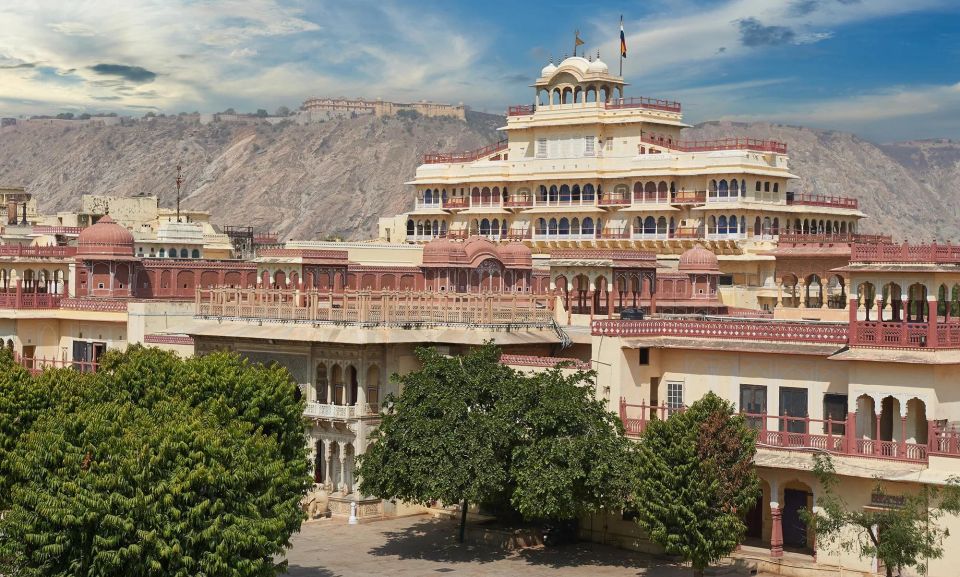
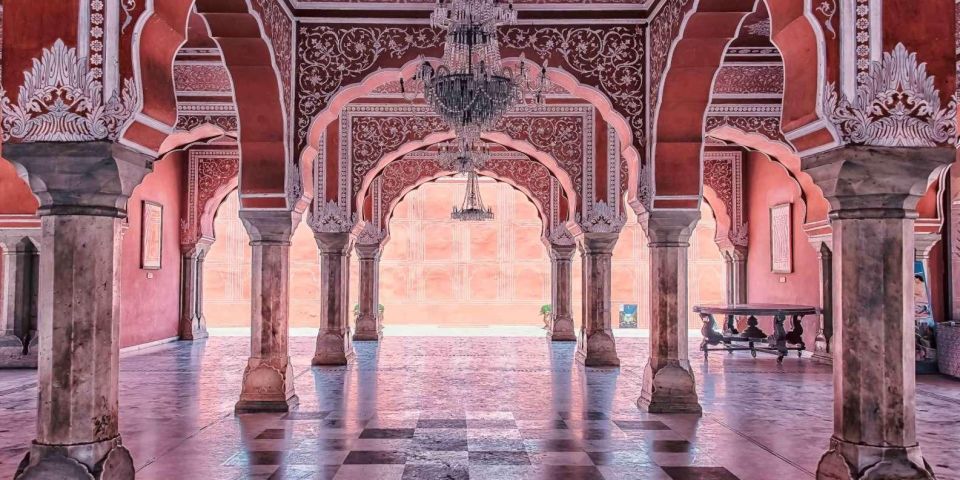
The standout is Chandra Mahal palace area, which now functions as a museum while still being a royal residence. That dual identity is fascinating: you get artifacts and exhibits, but you also sense the ongoing presence of royal tradition.
What makes this stop feel worthwhile with a guide is the interpretation. You’re not just walking through rooms. You’re learning why the layout matters, how royal life was shaped by the palace design, and how the palace has shifted roles over time.
The atmosphere here is different from the open-air feeling of forts. City Palace is more about surfaces, corridors, and controlled views. Plan to spend time looking at the transitions between public and private spaces, since that’s where the story becomes clearer.
As always, keep comfortable shoes on. Palace courtyards and interior areas can add up more walking than you expect.
Jantar Mantar: when astronomy becomes architecture
Jantar Mantar is only half “astronomy” and fully “design.” This UNESCO-style kind of site uses instruments made from stone to measure the sky, and your guided tour helps you understand how those forms work.
You’ll have about 30 minutes here, including guided sightseeing. That’s enough time to appreciate that these are not random sculptures. They’re instruments with specific purposes, built in a way that makes them readable once you’re shown how to see them.
This is one of the stops that can surprise people. If you only think of Jantar Mantar as a landmark, you may miss the ingenuity. With a guide, you start connecting angles and shapes to observations—suddenly it’s not just impressive, it’s logical.
If you enjoy diagrams, ask your guide to explain what each instrument is doing in simple terms. If you care about science history, this is a good place to ask questions, since your guide can connect the instruments to how people studied the sky long before modern tools.
Hawa Mahal again: a second look that seals the memory
Your day may end with Hawa Mahal, depending on how the schedule flows from your pickup. Either way, you’ll get time there for guided sightseeing and about 30 minutes of exploring.
What I like about revisiting (even if it’s just one visit, depending on the order) is that it changes your perspective after you’ve seen forts and palaces. Once you understand the bigger picture of Jaipur’s architecture, the lattice facade reads as a design tool with social function, not just a decorative wall.
If you’re buying time for photos, focus on the angles that show the pattern clearly. This is also a good moment to compare the facade details with what you saw at City Palace and Amber Fort, since it helps the day feel connected instead of like a checklist.
Price and value: why $32 can work here
At around $32 per person for an 8-hour private car tour, the value is strong if you care about having a guide and not just getting transported. You’re paying for a full day structure: pickup, a private vehicle, a live guide, water bottles, and multiple major sights grouped into one ride plan.
The best value shows up when you avoid paying separately for entrance fees and when you use the skip-the-line entrance. If you choose the option that includes monument entrance fees, it reduces the headache of figuring out what’s included on the spot.
The other value factor is time. In a city with traffic and distance, wasting half a day commuting between sights quickly makes a cheap transfer feel expensive. Here, the car is part of the package, and that lets you actually enjoy the sites within the same day.
There’s also value in the language support. The live guide is available in English, Spanish, German, Russian, Japanese, French, Hindi. If you’re comfortable with one of those, you’ll get more out of the stops because explanations won’t be a struggle.
Who should book this tour (and who should reconsider)
This tour fits you best if:
- You want a private guide and driver and prefer not to manage transit between sites.
- You like major Jaipur monuments but also want context—why places look the way they do.
- You want one full day that covers Amber Fort, Jal Mahal, City Palace, and Jantar Mantar without you building the plan.
You may want to reconsider if:
- You want a slow pace. The day is designed to cover a lot, including several guided stops and some walking.
- You’re pregnant. This activity is not suitable for pregnant women, according to the tour rules.
Should you book it?
If you want Jaipur with structure, comfort, and explanations that make the landmarks click, I think this is a solid booking. The strongest proof is in the details people highlight: clear guide explanations (including JK and Hitish) and smooth, well-regarded driving (from Prakash and Amit). That combination is what turns “see the sights” into a day you remember for the right reasons.
FAQ
FAQ
How long is the tour from start to finish?
The tour duration is 8 hours.
What pickup and drop-off options are available?
Pickup is available in all over Jaipur, with two stated options: Jaipur and Jaipur International Airport. Drop-off also lists Jaipur and Jaipur International Airport.
Is this a private tour?
Yes. It’s a private group experience with a private tour guide and private transport.
Which monuments and sites are included during the day?
You’ll visit Hawa Mahal, an ancient step well, Amber Fort, Jal Mahal, City Palace (including Chandra Mahal), Jantar Mantar, plus lunch time and leisure shopping time.
Does the price include lunch and entrance fees?
Lunch is included if you choose the option with lunch. Entrance fees to monuments are included if you choose the option that includes them.
What languages are the live guides available in?
Live tour guide languages include English, Spanish, German, Russian, Japanese, French, Hindi.