REVIEW · JAIPUR
Jaipur Sightseeing by Tuk-Tuk: Temples, Palaces & Markets
Book on GetYourGuide →Operated by Jaipur Pinkcity Tours · Bookable on GetYourGuide
Jaipur looks different from a tuk-tuk window. This 8-hour circuit keeps you moving between the big-name sights, with hotel pickup/drop-off and a guided route that doesn’t feel like a lecture. I like how the tour hits classic monuments first, then slows down for palace-and-observatory time, and finally gives you room for shopping.
Two things I especially like: the way you get to see photogenic set pieces like Hawa Mahal and Jal Mahal without spending your whole day navigating, and the fact that the guide support can be tailored to your interests. A possible drawback: entrance fees and camera fees are not included, so you still need a little cash/card readiness on-site.
In This Review
- The day in plain terms: timing, pace, and comfort
- Key highlights I’d circle on your map
- Entering the route: pickup, start times, and the 8-hour rhythm
- Hawa Mahal and Panna Meena ka Kund: icons first, then something unusual
- Amber Fort: the long stop that earns its reputation
- Jal Mahal on Man Sagar Lake: the photo stop that feels calm
- City Palace: where styles start mixing in plain sight
- Jantar Mantar: the “science break” that surprises people
- Lunch, shopping, and crafts: your flexible time slot
- Guides and drivers make or break the day
- Price and value: why $9 can still make sense
- Logistics that you should plan around
- Who should book this tour (and who might prefer something else)
- Should you book Jaipur Sightseeing by Tuk-Tuk?
- FAQ
- How long is the Jaipur Sightseeing by Tuk-Tuk tour?
- What time does the tour start?
- Does the tour include hotel pickup and drop-off?
- Are entrance fees included?
- Are meals included in the price?
- What languages are available for the guide?
- Is bottled water provided?
- What should I bring for the tour?
- Is free cancellation available?
The day in plain terms: timing, pace, and comfort
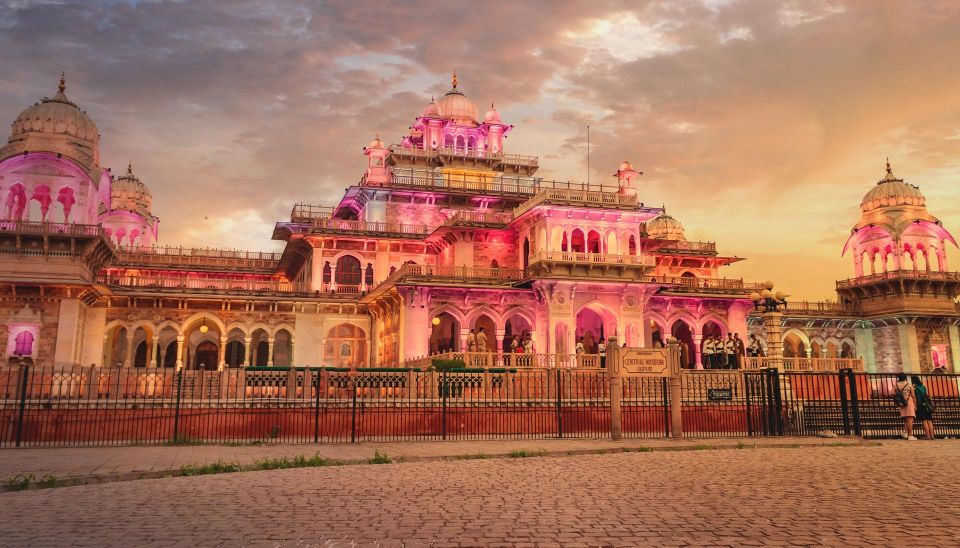
You can choose a morning start time from 8:00, 8:30, 9:00, 9:30, or 10:00, and the whole thing is built around that. The plan moves pretty briskly between stops, but it’s not a sprint—you get guided time at each major sight, plus breaks for lunch and shopping.
Your tuk-tuk driver and guide handle fuel, parking, and tolls, along with bottled water. That’s a big deal in India, where the “small” logistics can eat hours if you try to DIY. Just remember: the tour time is tight, so wear comfortable shoes and go in with clear priorities.
Key highlights I’d circle on your map
- Tuk-tuk transport that keeps the day efficient and simple, with pickup/drop-off included
- UNESCO Amer Fort + panoramic views, with guided time to understand what you’re seeing
- Hawa Mahal (953 windows) early in the route, when the light is often better for photos
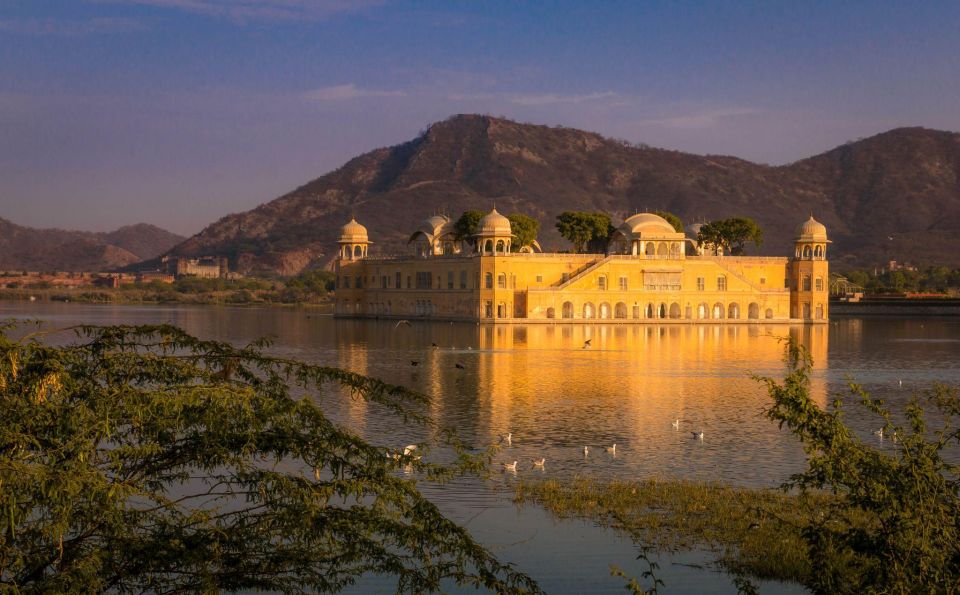
- Jal Mahal at Man Sagar Lake, a classic postcard scene with a relaxed photo stop
- City Palace and Jantar Mantar back-to-back, mixing palace detail with serious science instruments
- Market time plus local crafts, with chances to see how items are made rather than only shop
You can also read our reviews of more tours and experiences in Jaipur.


Entering the route: pickup, start times, and the 8-hour rhythm
This tour is sold as a full Jaipur sampler, and the structure reflects that. You’re picked up from your hotel in Jaipur (and the provider also mentions pickup from the airport/railway station or any location you choose). Then you roll through the city in a tuk-tuk—close enough to feel the vibe, controlled enough to stay on schedule.
The big practical help is that you’re not coordinating multiple auto-rickshaws, tickets, and directions. The route includes guided visits for each major stop, with set time blocks—think 30 minutes here, 1 hour there. That matters because Jaipur traffic and crowding can turn “one monument” into “half a day.”
When to pick a start time: if you like photos and fewer headaches, earlier is usually smarter. If you’re traveling on a slower rhythm, the later start still works, but expect more heat and more people around the core sights.
Hawa Mahal and Panna Meena ka Kund: icons first, then something unusual
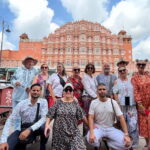
Hawa Mahal is where a lot of people stop for selfies. Here, you get a guided visit (about 30 minutes) that helps you read the building instead of just admiring the color. The key detail is the design: 953 windows meant for royal women to observe street life without being seen. Even if you don’t memorize that number, the idea lands fast once you look at the lattice pattern.
Right after that, you head to Panna Meena ka Kund for another guided stop (about 30 minutes). This isn’t one of the typical “top three” postcards for first-timers, which is a good thing. It gives your day a breather from the big palaces and also shows another side of Jaipur’s architecture—step-well geometry, symmetry, and the kind of design that’s easier to appreciate when someone points out what you’re looking at.
What to watch for: bring your phone for photos, but also take a minute to look up and notice the repeating details. Hawa Mahal especially rewards patience. Thirty minutes goes fast when you’re shooting like a machine, so plan a couple of slow moments.
Amber Fort: the long stop that earns its reputation
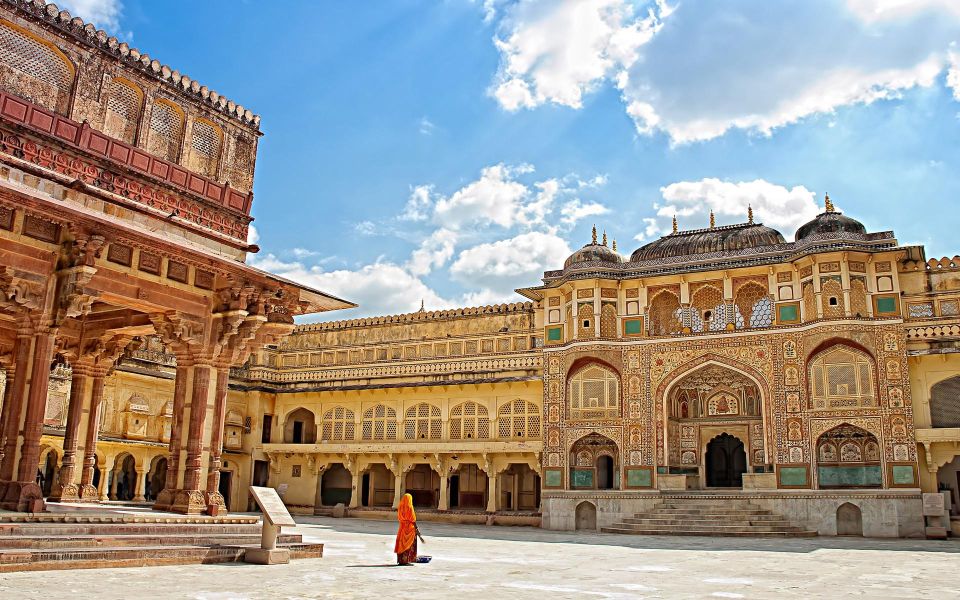
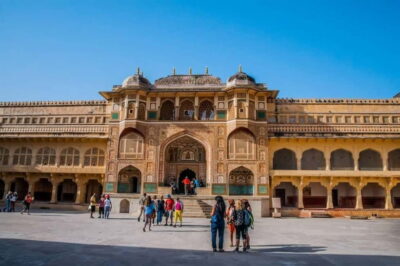
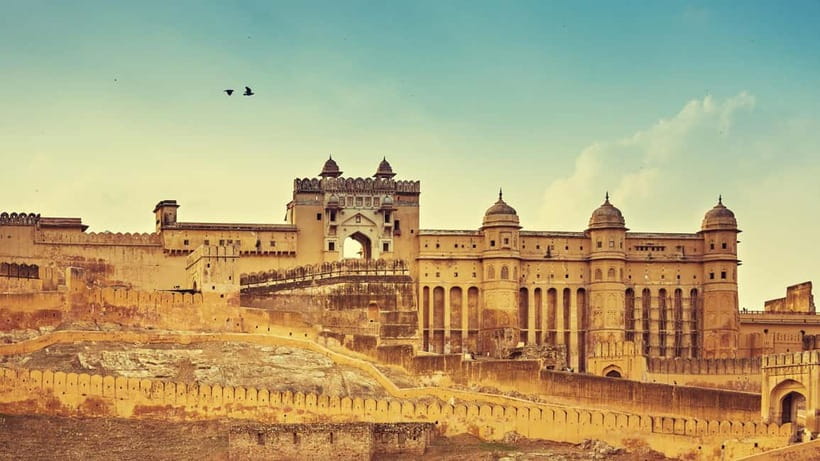
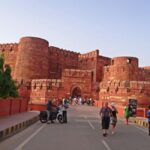
Then you hit Amber Fort (about 1.5 hours). This is the heavy-hitter on the day. It’s a UNESCO World Heritage Site, built in the 16th century under Raja Man Singh I, and known for a blend of styles—Rajput and Mughal influences.
If you only see Amber from the outside, you miss the point. With guided time, you can focus on the parts that tell you how power and aesthetics worked here: courtyards, ornate palace sections, and the kind of stone carving that’s meant to be admired at human scale, not just from a distance. The fort sits above the landscape, so panoramic views come naturally. And those views matter, because they explain why Jaipur’s rulers cared about control of the city routes and surrounding areas.
Practical tip: wear shoes you can trust on uneven stone. Also, keep your water bottle handy—once you’re inside, shade can vary by section.
Jal Mahal on Man Sagar Lake: the photo stop that feels calm
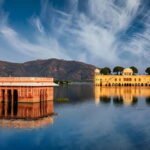
After Amber, the route shifts gears to Jal Mahal (about 30 minutes). This is a palace that appears to float on Man Sagar Lake, built in the 18th century by Maharaja Madho Singh I. The setting is the entire story: palace silhouette, reflected light, and the hills in the background.
This stop works because it’s shorter and gentler than Amber Fort. You’re not asked to “power through” a huge site. Instead, it’s your chance to step back, get a classic shot, and reset your energy for the palaces and science stop that come next.
A quick reality check: Jal Mahal is a visual landmark first. You’ll get the viewpoint and photos, but don’t assume you’re spending an afternoon exploring every interior detail unless the day’s access allows it. Thirty minutes is mainly about the look and the photos.



City Palace: where styles start mixing in plain sight
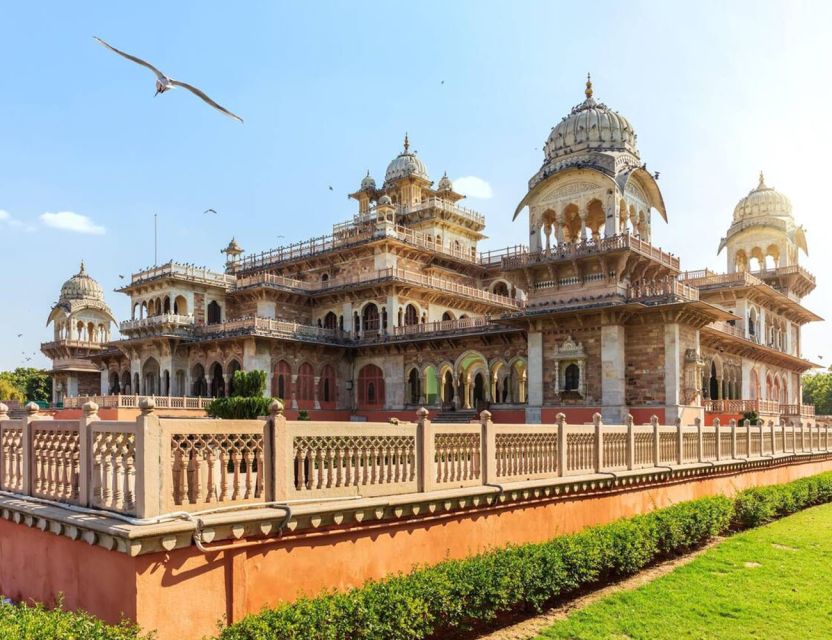
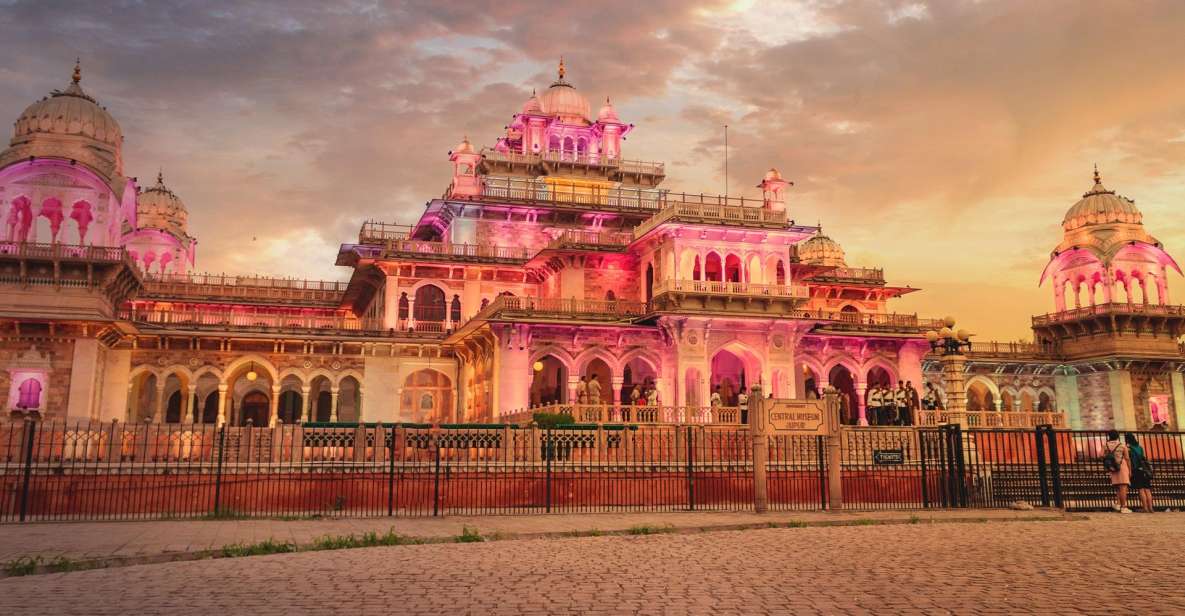
Next is City Palace (about 1 hour). This was the Maharaja’s seat in Jaipur, and the building complex shows a mix of influences—Rajput, Mughal, and European touches. That matters because it’s a visual timeline: power changes, trade and diplomacy happen, and the architecture starts showing those connections.
With guided time, you can walk courtyards and interpret opulent halls and decorated spaces without getting lost. City Palace is also where your guide can help you connect what you saw at Hawa Mahal and Amber Fort to the broader story of Jaipur as a royal center.
Good move on your side: decide what you care about most—painted interiors, architecture details, or court life—then aim your questions during the tour. A good guide will point you to the right sections instead of making you wander.
Jantar Mantar: the “science break” that surprises people
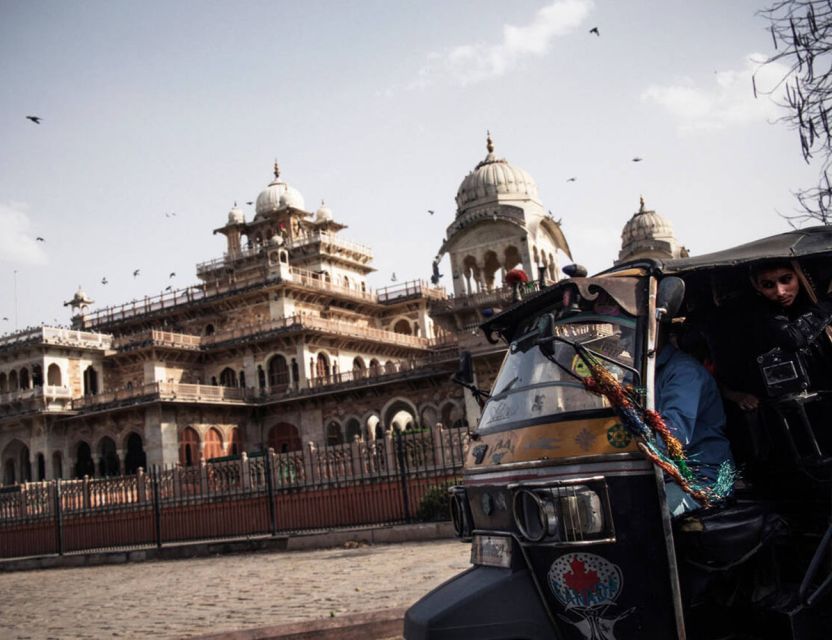
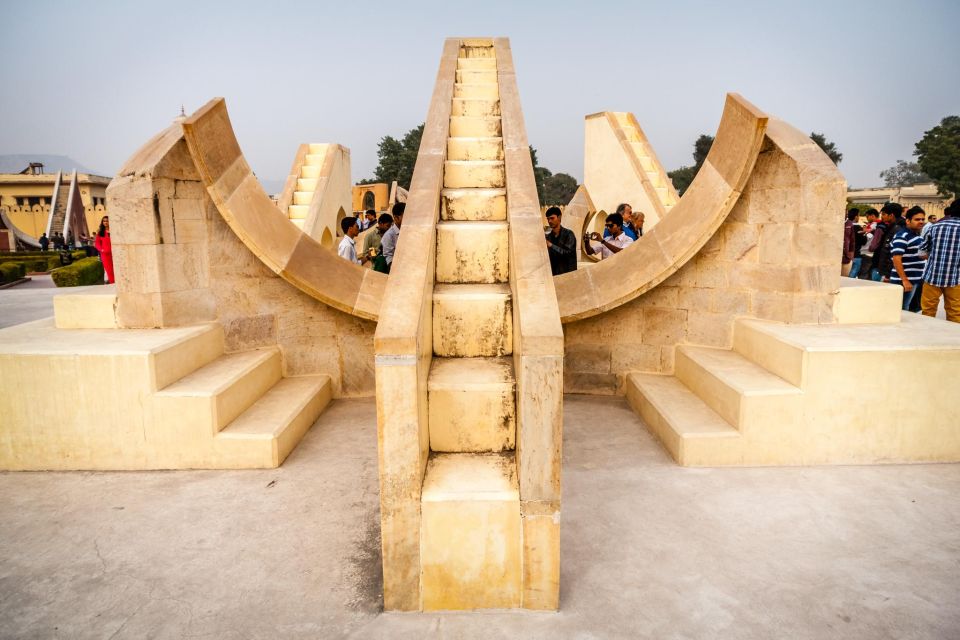
Then comes Jantar Mantar (about 1 hour). This is an astronomical observatory built by Maharaja Sawai Jai Singh II in the 18th century, and it’s another UNESCO site. Instead of carvings and courtyards, you get massive stone instruments used to measure time, track celestial movements, and predict eclipses.
This stop is valuable because it changes how you think about these palaces and fort builders. It’s not only about defense or display. It’s also about observation, calculation, and technology—built into monumental stone shapes you can actually stand next to.
If you like facts: ask your guide to explain how the instruments measure time or track the sky. The guide time here matters, because the instruments look like sculpture until someone translates them into how they worked.
Lunch, shopping, and crafts: your flexible time slot
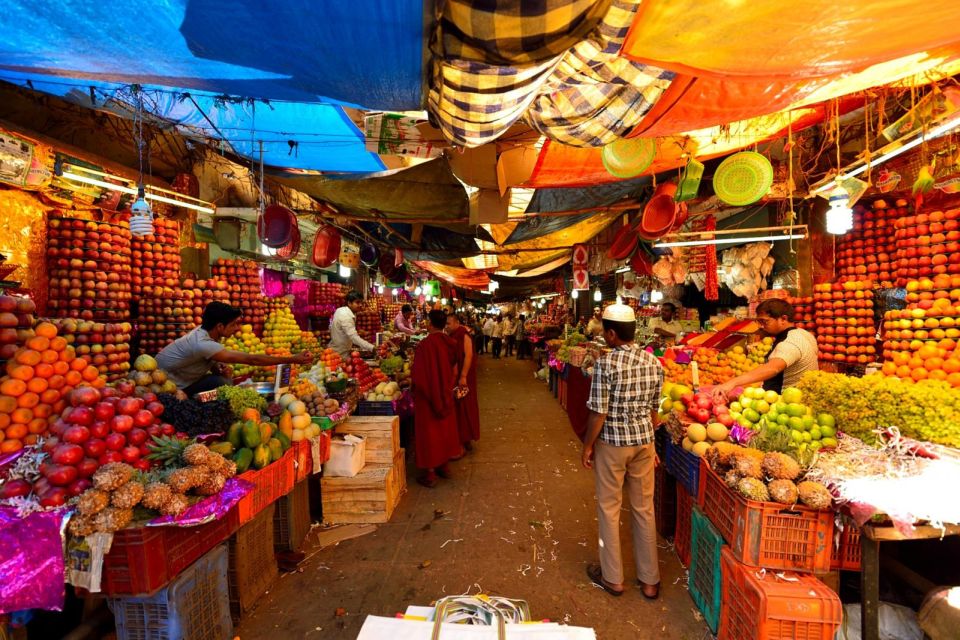
The day includes lunch (about 1 hour) and shopping time (about 1 hour). These blocks are where the tour becomes personal. You can use lunch to recharge and then shop without feeling like you’re rushing between attractions.
For shopping, the tour focuses on practical categories: silver jewelry, gem stones, blue pottery, and other handicrafts. You’ll also see textiles, bangles, and items connected to block printing. The best version of this hour is when you watch artisans work or at least learn how the craft process works, not just what the item looks like.
One useful cue from the experience format: the route also mentions cultural experiences like folk dance performance or hands-on crafts workshops, depending on what’s available during the day. If that option shows up, it’s worth leaning into—because it turns shopping into understanding.
Shopping tip: set a budget before you enter shops. Jaipur has great crafts, but one-hour shopping is still one hour. If you’re not sure what to buy, focus on items that represent skill (block prints, pottery, worked metal) rather than only on souvenirs.
Guides and drivers make or break the day
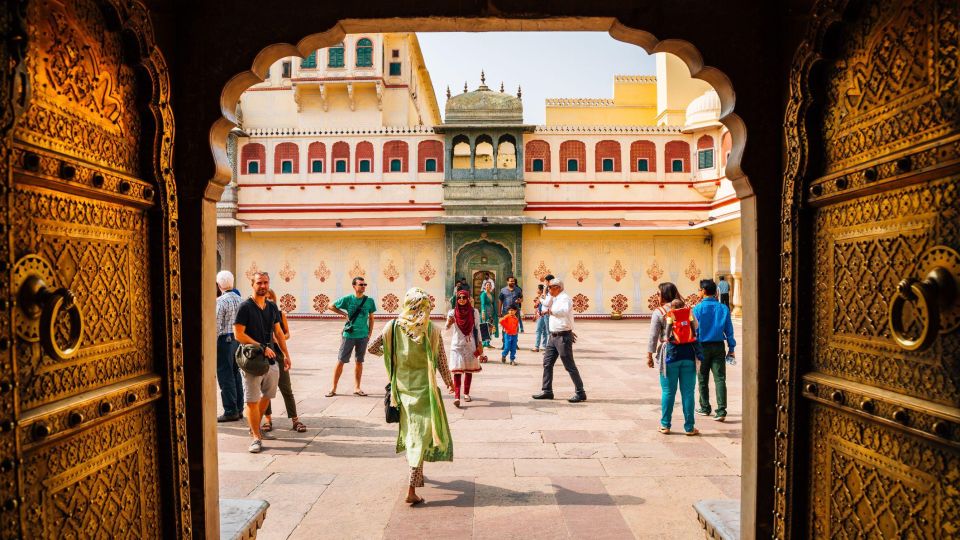
The reviews around this tour repeatedly come back to one thing: the people. Names that came up include Rajendra (reported as speaking perfect Spanish, answering questions like a pro, and taking excellent photos), Mustaq, Amzad Ali (credited with perfect English and Italian and offering travel advice beyond the route), and Shakeer (described as considerate, accommodating, and able to tailor the day toward monument-and-building interests).
That matches what you should look for in a city like Jaipur: someone who can steer you to the meaningful details. A strong guide doesn’t just recite dates. They help you notice patterns—why Hawa Mahal’s windows matter, how Amber Fort’s design supports the way you move through it, and what makes Jantar Mantar’s instruments more than decoration.
And the driver side matters too. You want someone who understands tight time windows and can position you for quick photo moments without turning the day into traffic stress.
What you can do: before the tour starts, tell your guide what you want most—monuments, architecture details, photography, or shopping. The tour is built to adapt, and your time is limited.
Price and value: why $9 can still make sense
The listed price is about $9 per person for an 8-hour day. At first glance, that seems almost too cheap for a full guided route. Here’s why it can make sense: the package includes pickup and drop-off by tuk-tuk, plus fuel, parking, and tolls, and bottled water. A professional guide is included (with many language options if you pick the right option).
Now the honest part: entrance fees and camera fees are not included, and meals are not included. So the true total depends on what you pay at sites. Still, even with those added costs, you can end up with good value because you’re paying for guided logistics and time efficiency.
Also, the description mentions skipping the ticket line. That can save real time when queues are long, especially at peak moments. If you’ve ever lost an hour in a ticket line in a big city, you’ll understand the value fast.
Logistics that you should plan around
A few practical notes will keep your day smooth:
- Bring a passport or ID card, since it’s listed as required.
- Expect a day with lots of stops and walking. Comfortable shoes matter more than fashion.
- If you’re sensitive to heat, plan for water and sun protection. Bottled water is included, but you’ll still want your own coping strategy.
- Camera fees: assume you might pay extra depending on what you want to shoot.
Who should book this tour (and who might prefer something else)
This tour is a strong fit if you want:
- A first-time Jaipur day with the biggest architectural hits
- A guided route that turns monuments into understandable stories
- Efficient transport in tuk-tuk form without juggling directions
It may be less ideal if you:
- Want a slow, unhurried day where you can linger for hours in one place
- Are looking for everything to be fully inside and hands-on for long periods (some stops are viewpoint/photo-focused)
Should you book Jaipur Sightseeing by Tuk-Tuk?
If you’re doing Jaipur for the first time and you want a tight 8-hour plan that covers Amer Fort, Hawa Mahal, Jal Mahal, City Palace, and Jantar Mantar—plus lunch and shopping—this is a smart way to spend your day. The price can be a great deal because transport and guide time are built in.
I’d book it if you care about monuments, like learning what you’re looking at, and want your day organized by people who know the route. I’d think twice if you hate schedules or you’re the type who needs long solo wandering time in one museum-style stop.
One final nudge: message your guide (or add a note at booking) with your top two priorities—photos, architecture, shopping, or the palace/science mix. Then you’ll get the best version of this tuk-tuk day.
FAQ
How long is the Jaipur Sightseeing by Tuk-Tuk tour?
The duration is 8 hours.
What time does the tour start?
You can choose starting times at 8:00 am, 8:30 am, 9:00 am, 9:30 am, or 10:00 am.
Does the tour include hotel pickup and drop-off?
Yes. Pickup and drop-off are included by tuk-tuk, and pickup is available from the hotel (and also mentioned for the airport/railway station or any location of your choice).
Are entrance fees included?
No. Entrance fees and camera fees are not included.
Are meals included in the price?
No. Meals are not included. Lunch is scheduled as a 1-hour stop, but it’s not listed as included.
What languages are available for the guide?
The guide option includes languages such as English, Italian, Japanese, Spanish, French, Hindi, German, and Russian.
Is bottled water provided?
Yes, bottled water is included.
What should I bring for the tour?
You should bring a passport or ID card.
Is free cancellation available?
Free cancellation is available up to 24 hours in advance for a full refund.